By Adelaide Stewart-Jones, accredited dog trainer (IMDT, UK Dog Behaviour and Training Charter) and IAABC member. Founder of The Confident K9 in Kidderminster.
Sore shoulders, a dog who chokes against their collar, and walks that feel more like waterskiing than a pleasant stroll. Pulling on the lead is one of the most common training problems I see around Kidderminster and Worcestershire, and one of the most fixable.
Loose lead walking is not about strict heelwork or a dog glued to your leg. It is about a slack lead, a dog who checks in with you, and walks that both of you enjoy. This guide explains why dogs pull, what equipment actually helps, and a practical plan to get you there.
🐾 Tired of being pulled along? Loose lead walking is one of the most popular topics in our dog training packages, with in-person sessions around Kidderminster and online sessions UK-wide.
Why dogs pull on the lead
Pulling works
Every time your dog pulls and you follow, pulling is rewarded. They get closer to the smell, the dog, the park. Most dogs have had thousands of these repetitions before anyone starts training, which is why pulling can feel so stubborn.
We are slow and boring
Left to their own devices, most dogs move faster than we do and in a zigzag pattern, investigating as they go. Walking in a straight line at human pace is not natural for them. It is a skill we need to teach.
The opposition reflex
When pressure is applied, dogs, like many animals, tend to lean into it. A tight lead creates pressure, and the dog pushes against it. Constant tension on the lead can actually encourage more pulling.
Excitement, stress and unmet needs
A dog who has been inside all day, or who is anxious about the environment, will find it much harder to walk calmly. Pulling towards or away from things can also be a sign of fear or reactivity, which needs a different approach. We explain this in our post on reactive dog training in Kidderminster.
Equipment for loose lead walking: what helps and what to avoid
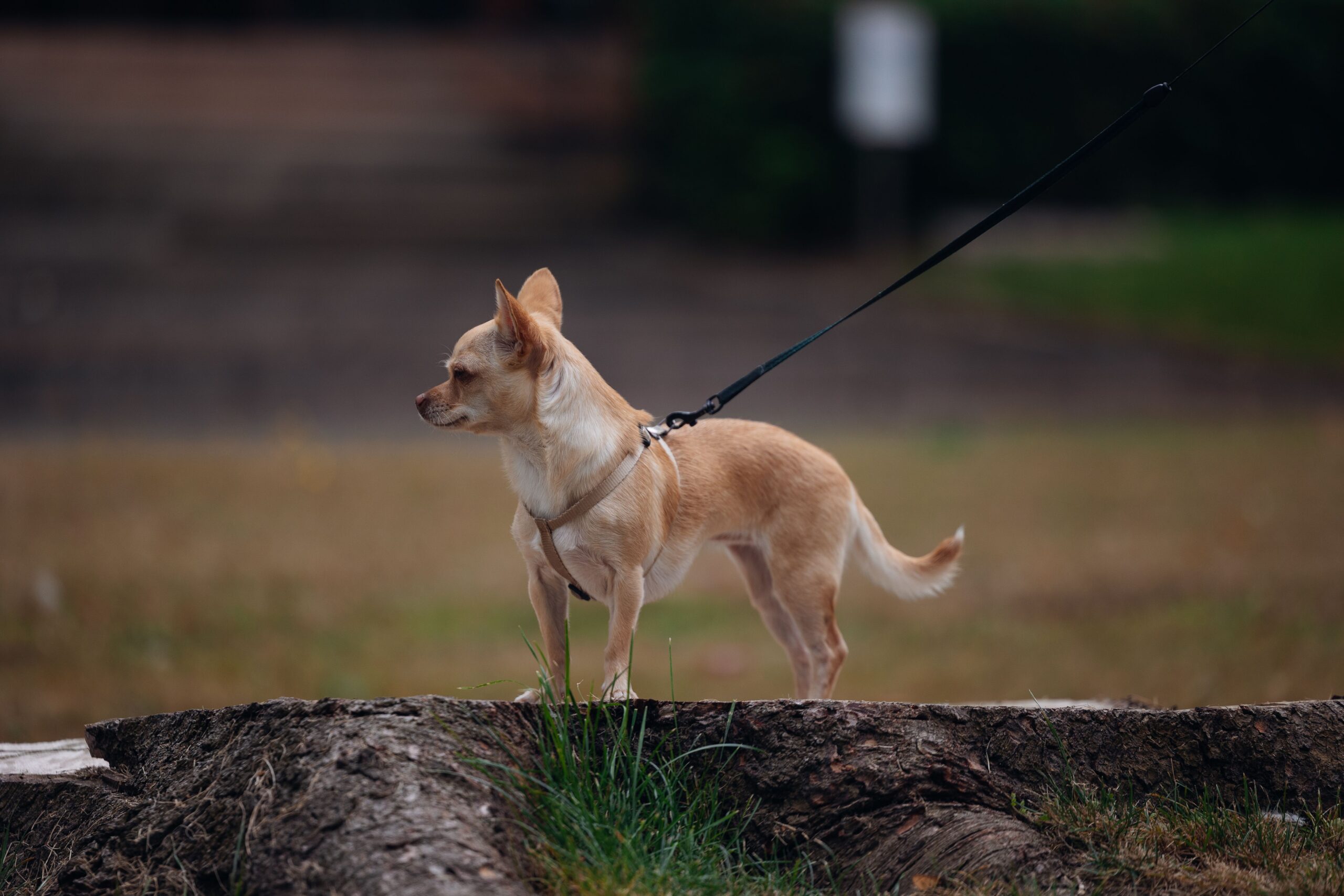
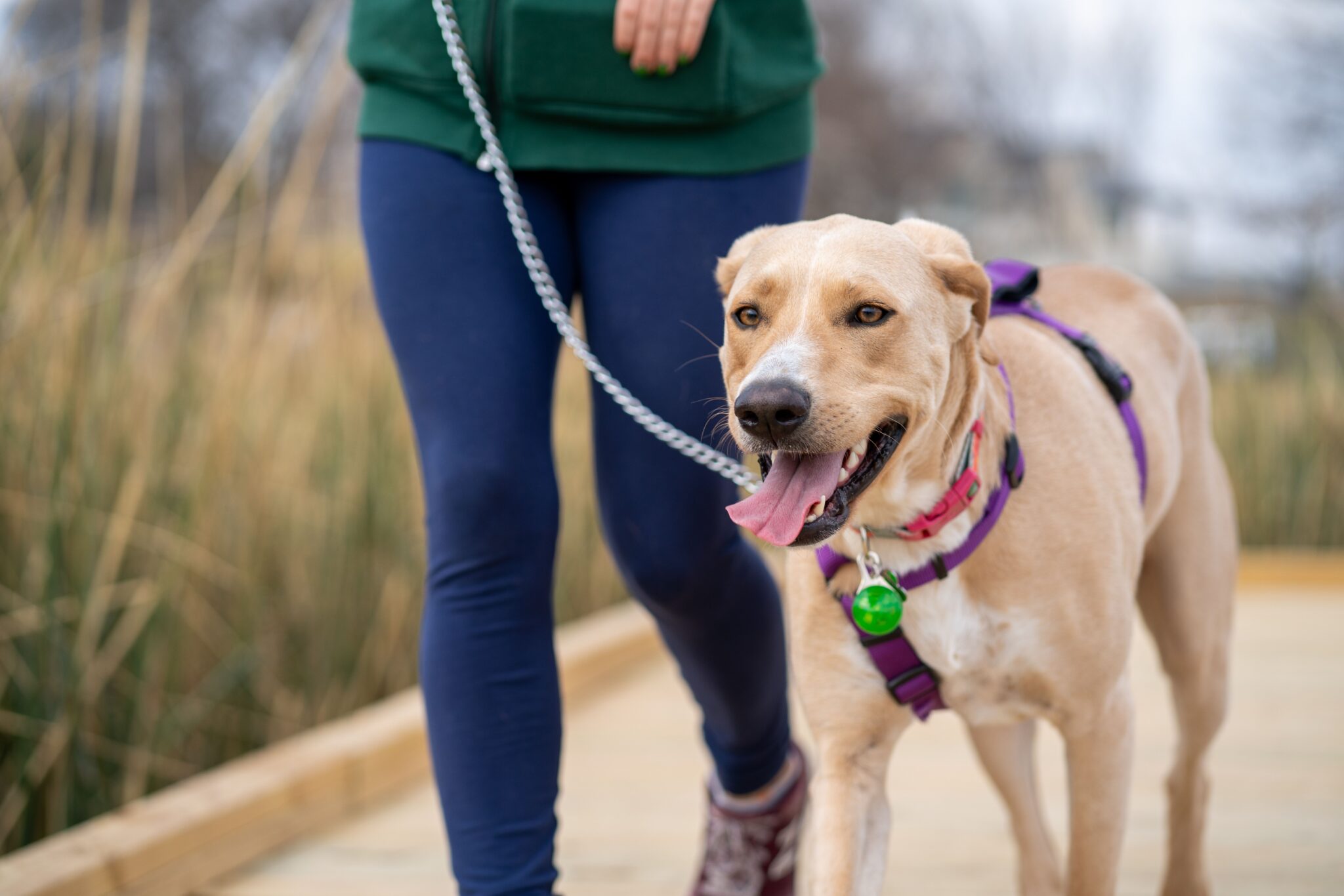
A well-fitted harness is the best choice for most dogs. A Y-shaped harness that sits clear of the shoulders allows natural movement and spreads pressure across the chest rather than the neck. Harnesses with a front clip as well as a back clip give extra steering while you train.
Collars are fine for carrying ID, but a dog who pulls on a collar puts considerable pressure on the neck. A 2006 study found that pressure from a collar significantly increased pressure within the eye, while a harness did not. For dogs with eye conditions, neck problems or breathing difficulties, a harness is especially important.
A longer lead, around two to three metres, gives your dog more freedom and reduces tension. Very short leads tend to create constant pressure.
What to avoid: slip leads used to correct pulling, choke chains, prong collars and any equipment that works by causing discomfort. As well as the welfare concerns, aversive equipment can create negative associations with whatever the dog was looking at when the pressure happened, including people and other dogs.
A loose lead walking plan that works
Step 1: Build value at your side
Start indoors, where there are no distractions. Reward your dog every time they are near your side. Be generous: a high-value treat such as cooked chicken, cheese or liver cake, delivered right next to your leg, teaches your dog that this is the best place to be. Take a step, reward. Take two steps, reward. Short, frequent sessions work best.
Step 2: Stop when the lead goes tight
When the lead becomes tight, stop and stand still. The moment the lead slackens, whether your dog looks back or steps towards you, mark it and move forward again. Your dog learns that a tight lead stops progress and a loose lead makes things happen.
Step 3: Change direction
If your dog is focused on pulling ahead, cheerfully turn and walk the other way, rewarding them as they catch up with you. This keeps your dog interested in where you are going and stops a standoff developing.
Step 4: Reset with a “find it”
If your dog becomes too excited to concentrate, scatter a few treats on the ground and say “find it”. Sniffing helps lower arousal and gives your dog a moment to reset before you continue.
Step 5: Build up gradually
Move from the house to the garden, then to a quiet street, before attempting busy places such as Kidderminster town centre or a popular park. Each new environment is a step up in difficulty. Lower your expectations and raise your rate of reward every time you add something new.
The two-walk idea
Here is a tip that makes a real difference for many of my clients. Not every walk has to be a training walk. Sometimes, your dog simply needs to sniff, explore and decompress.
Try separating the two clearly. For training walks, clip the lead to the front of the harness and work on loose lead walking for short periods. For sniffing walks, clip the lead to the back of the harness, or use a long line in a safe open space, and let your dog explore. The different set-up helps your dog understand what is expected, and the sniffing walks reduce frustration, which makes training walks easier.
Private dog fields can be ideal for this, and we list local options in our guide to secure dog fields near Kidderminster.
Puppies and loose lead walking
Puppies learn loose lead walking far faster when we start early, before pulling becomes a habit. Begin indoors and in the garden long before your puppy’s first walk. Our week-by-week puppy training schedule shows where lead skills fit into the first few months, and our guide to puppy socialisation in Worcestershire explains how to introduce the outside world at the right pace.
When to get help
If your dog’s pulling is linked to lunging, barking or fear, or if you are struggling to make progress, a qualified trainer can help you build a plan around your dog. Our dog training services cover loose lead walking in person around Kidderminster and online across the UK. If you are looking for a practitioner further afield, the Animal Behaviour and Training Council keeps a register of accredited trainers.
View dog training packages and book online
FAQ
Why does my dog pull on the lead?
Dogs pull because it works: it gets them to things they want faster. Most dogs naturally move faster than people, and tension on the lead can trigger the opposition reflex, encouraging them to push harder.
What is the best equipment for loose lead walking?
A well-fitted Y-shaped harness, ideally with front and back clips, and a lead of around two to three metres suits most dogs. Avoid equipment that works by causing discomfort, such as choke chains or prong collars.
Is a collar or harness better for a dog that pulls?
A harness is usually the better choice. Research has shown that pulling on a collar increases pressure within the eye, and collars concentrate force on the neck. A well-fitted harness spreads pressure more safely.
How long does it take to teach loose lead walking?
Most dogs show improvement within a few weeks of consistent training, but reliability in busy, exciting places takes longer. Short, frequent sessions and gradually increasing difficulty give the best results.
Should my dog walk to heel all the time?
No. Loose lead walking simply means a slack lead. Your dog can be in front, beside or slightly behind you, and can sniff and explore, as long as the lead stays loose. Formal heelwork is a separate skill.
Why is my dog fine in the garden but pulls on walks?
The outside world is full of smells, sounds and distractions that make loose lead walking much harder. Build up gradually from quiet places to busier ones, and increase your rate of reward in each new environment.
Do head collars stop pulling?
Head collars can reduce pulling, but many dogs find them uncomfortable, and they need careful introduction and gentle handling to avoid injury. For most dogs, a well-fitted harness and reward-based training is the better starting point.
My dog pulls towards other dogs. Is that normal?
Many dogs pull towards other dogs out of excitement. However, if pulling comes with barking, lunging or stiffness, your dog may be reactive or frustrated, and would benefit from a tailored behaviour plan rather than lead training alone.
Can you teach loose lead walking online?
Yes. Online sessions work well for loose lead walking, as we can coach you through foundations at home and review video from your walks. We also offer in-person sessions around Kidderminster.





Comments are closed