Last updated: 3 October 2026
By Adelaide Stewart-Jones, accredited dog trainer (IMDT, UK Dog Behaviour and Training Charter) and IAABC member. Founder of The Confident K9 in Kidderminster.
Bonfire Night is on 5 November. But in practice, fireworks season in the UK runs from late October through to mid-November, with displays on the weekends either side of the 5th as well as the night itself. If your dog finds fireworks stressful, the time to start preparing is now, not on the evening of the 5th.
This post gives you a clear, week-by-week plan for preparing your dog for Bonfire Night. The earlier you start, the more you can do to reduce their stress. Even if you are reading this a few days before, there are still practical steps that will make a meaningful difference.
🐾 Is your dog’s firework fear severe? Our dog behaviour consultations include noise phobia and sound sensitivity as part of a comprehensive behaviour programme. Get in touch now before the season begins.
Why preparation matters more than management on the night
The most common approach to dogs and fireworks is reactive: the fireworks start, the dog panics, the owner does their best to comfort them, and everyone endures the night. This is understandable, but it is the least effective approach.
Preparation changes the picture significantly. A dog that has a familiar safe space set up well in advance, that has been gradually exposed to reduced sound cues over several weeks, that has calming aids in place and is not caught off guard by their onset, is in a meaningfully better position than a dog for whom the first bang of the season is also the first moment their owner does anything about it.
You cannot eliminate firework anxiety overnight. But you can reduce it, manage it more effectively, and prevent it from worsening year on year.
Four weeks before Bonfire Night (early October)
Speak to your vet. This is the most time-sensitive action on this list. Some veterinary medications for anxiety, including certain anxiolytic drugs that are most effective for noise phobia, need to be started several weeks before the stressful event. If you wait until the week before Bonfire Night, some options will no longer be available to you. Book a vet appointment now to discuss what is appropriate for your dog.
Order an Adaptil diffuser. Adaptil works by releasing a synthetic version of the calming pheromone that mother dogs produce. As a diffuser it needs to be plugged in and running for several days before the fireworks season begins to reach effective levels. Order one now and plug it in in the room your dog spends most time in.
Start a sound desensitisation programme. The Dogs Trust offers a free sound therapy programme at dogstrust.org.ukwhich includes fireworks tracks designed specifically for this purpose. Download the tracks and begin playing them at the lowest possible volume during positive activities such as mealtimes or play sessions. The volume should be so low that your dog shows no noticeable response. The goal at this stage is not to make progress, it is to begin building a neutral association with the sound.
Two to three weeks before Bonfire Night
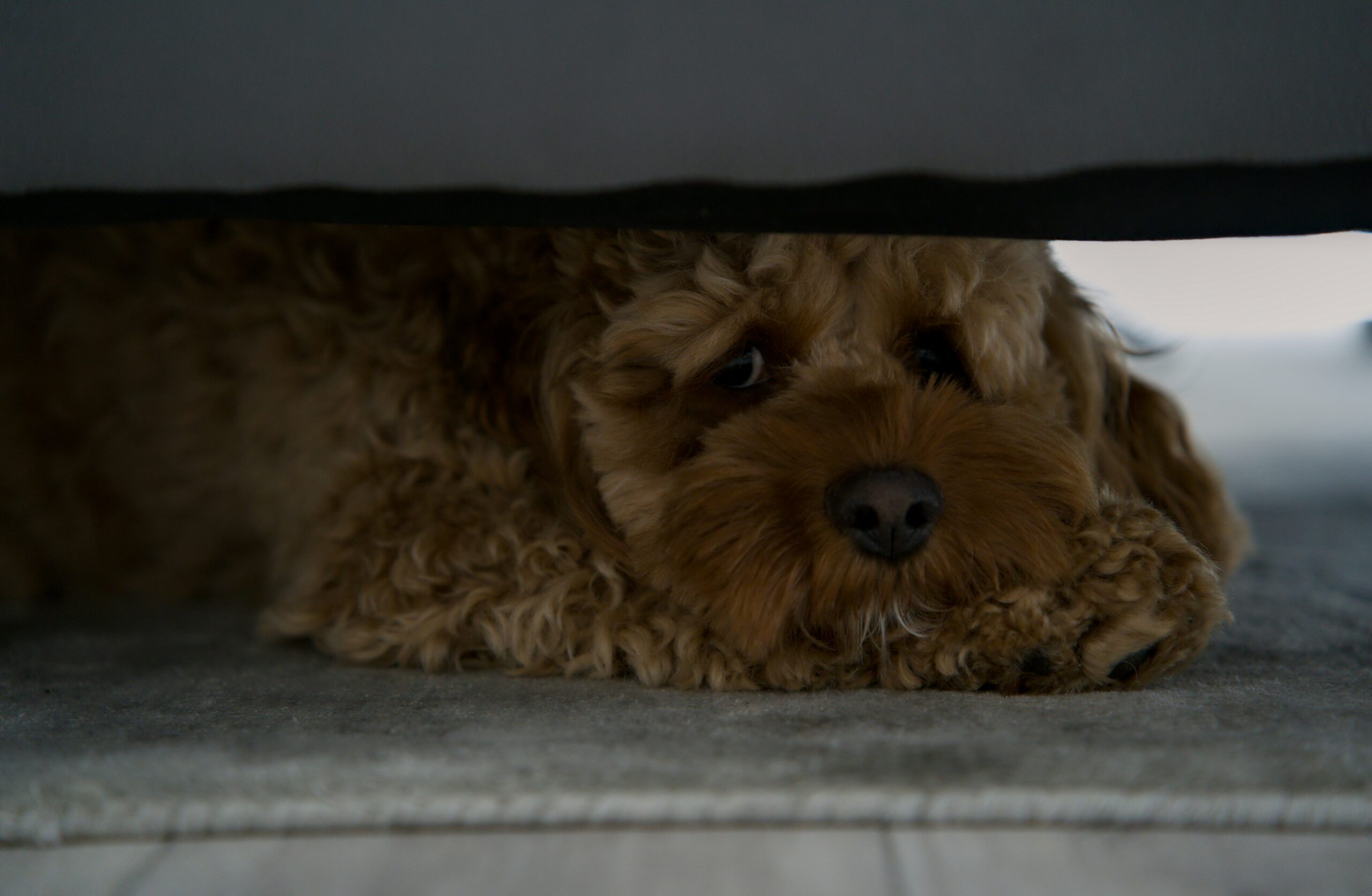
Set up your dog’s safe space. Choose a location your dog already favours: under a bed, in a crate, in a corner of a room. Add extra blankets, familiar smelling items, and something long-lasting to chew. Encourage your dog to use the space in normal daily life by dropping treats and toys there. The goal is for the safe space to feel familiar and positive before it is needed, not to introduce it for the first time on the night.
If your dog is crate trained, ensure the crate is set up and accessible with the door open throughout this period. If your dog is not crate trained, a covered pen or a den made from a table draped with blankets can serve the same purpose.
Gradually increase the volume of the sound therapy tracks. Continue playing the tracks during positive activities. If your dog remains relaxed and unconcerned, increase the volume very slightly. If they show any sign of noticing the sound, such as ear flicks, pausing eating, or looking around, you have increased too quickly. Go back to the previous volume and stay there for several more sessions.
Check your dog’s microchip and ID tag. Every fireworks season sees an increase in dogs going missing after bolting in panic. Ensure your dog’s microchip details are up to date and they are wearing a collar with a current ID tag. Check your garden fencing for any gaps or weak points that a panicked dog might exploit.
Check local fireworks event dates. Search for fireworks displays in your area and note the dates. Your local council website and Bonfirenight.net are useful resources. Knowing which evenings are most likely to involve heavy fireworks allows you to plan walks, medication timing, and your own schedule accordingly.
One week before Bonfire Night
Begin any veterinary medication as directed. If your vet has prescribed medication for the fireworks period, begin it as directed. Some medications are given daily for a period before the event, others are given on the day itself. Follow your vet’s specific instructions.
Trial the Thundershirt if you are using one. If you have purchased a pressure wrap, introduce it during calm, positive moments in the week before it is needed. Let your dog wear it for short periods during enjoyable activities so it becomes familiar rather than being introduced for the first time in the middle of a stressful event.
Plan your Bonfire Night evening. Decide in advance where you and your dog will spend the evening, which room has the best sound insulation, what background noise you will use, and whether you will be home with your dog. Where possible, arrange to be at home with a dog that struggles with fireworks. If you cannot be home, arrange for someone the dog knows and is comfortable with to be there.
Walk your dog during daylight. From the 1st of November onwards, aim to complete your dog’s main walk during daylight hours. Evening walks during the fireworks period significantly increase the chance of a frightening encounter with sudden fireworks, and a dog that bolts in the dark in an unfamiliar area is in serious danger.
On the day of Bonfire Night
Exercise your dog well during daylight. A tired dog is a calmer dog. Aim for a longer than usual walk during the day to help reduce your dog’s overall arousal level going into the evening.
Feed your dog earlier than usual. A dog with a full stomach tends to be calmer than a hungry one. Feed the main meal in the late afternoon rather than the evening so your dog is settled and comfortable before the fireworks begin.
Set up the room before dark. Close windows and curtains, set up background noise at a volume that will comfortably cover the sound of fireworks, ensure the safe space is set up with access to water and something to chew, and have high-value treats available to offer if your dog takes them.
Remain calm. Your dog reads your emotional state. If you are visibly anxious and monitoring your dog constantly, this communicates that there is something to be worried about. Behave as normally as possible, which for most dogs means calmly watching television, reading, or working on your laptop in the same room as your dog.
Respond to your dog rather than to the fireworks. If your dog is coping and settled, do not interrupt them to offer reassurance. If your dog seeks comfort, provide it calmly. If your dog is pacing or cannot settle, gently encourage them toward their safe space without forcing. Offer very high-value treats if they will take them.
Do not let your dog out in the garden alone. Supervise all garden trips during the evening and keep your dog on a lead. A single unexpected firework can cause a dog to bolt over even a previously secure fence.
After Bonfire Night
Fireworks season does not end on 5 November. There will typically be displays on the surrounding weekends and often on New Year’s Eve. Maintain your management strategies until mid-November.
If your dog’s response this year was significantly worse than last year, or if the anxiety is affecting their daily life beyond the fireworks season, a behaviour consultation is the right next step. Noise phobia that is not addressed tends to become more severe over time, and the sooner it is properly worked on, the better the prognosis.
View our behaviour consultation packages
Get in touch to discuss your dog’s situation
Frequently Asked Questions: Preparing Your Dog for Bonfire Night
How early should I start preparing my dog for Bonfire Night?
Ideally six to eight weeks before the 5th of November, which means early to mid-September for a full programme. Four weeks gives you enough time to speak to your vet, set up calming aids, and do some desensitisation work. Even one week of preparation is better than none.
What is the single most effective thing I can do to help my dog on Bonfire Night?
Speak to your vet before the season begins. For dogs with moderate to severe firework anxiety, veterinary medication during the event is often the most effective single intervention available, and some options need to be started in advance. This is the step most owners leave too late.
Should I stay home with my dog on Bonfire Night?
Yes, if at all possible. A dog that is anxious during fireworks benefits enormously from the presence of a trusted person. If you cannot be home, arrange for someone your dog knows well to be there. Leaving a noise-phobic dog alone on Bonfire Night risks a significantly more distressing experience and potentially dangerous escape behaviour.
Can I walk my dog on Bonfire Night?
Keep walks to daylight hours from 1 November onwards. Avoid walking in the evening, particularly in areas near known fireworks venues. If you do need to take your dog out after dark, keep them on a short lead and be prepared to turn back quickly if fireworks start.
Does the Thundershirt really work?
For some dogs, yes. Pressure wraps have good anecdotal evidence and some clinical trial support for reducing anxiety in dogs. They are most effective for mild to moderate anxiety and when introduced before the stressful event rather than during it. They do not work for all dogs. They are worth trying as part of a broader management plan but are unlikely to be sufficient on their own for dogs with significant noise phobia.
My dog ate nothing and hid all night last year. What should I do differently this year?
Speak to your vet as soon as possible about medication for this year’s season. The level of distress you are describing suggests significant noise phobia that warrants veterinary support beyond over-the-counter calming products. Also consider a behaviour consultation to begin a longer-term desensitisation programme so that next year’s season is easier still.
Are fireworks legal in the UK and is there anything I can do?
Fireworks are legal for private use in the UK between 7am and 11pm, or until midnight on Bonfire Night, New Year’s Eve, Diwali, and Chinese New Year. Local councils can apply for restrictions in certain areas. If you would like to advocate for quieter fireworks in your area, the RSPCA has a campaign and petition at rspca.org.uk.
When should I consider professional behaviour support for fireworks fear?
If your dog’s firework fear is causing significant distress, worsening year on year, affecting their welfare outside of fireworks season, or leading to dangerous behaviour such as attempting to escape, a behaviour consultation is the right step. Get in touch and we can discuss the best approach for your dog.






Comments are closed