
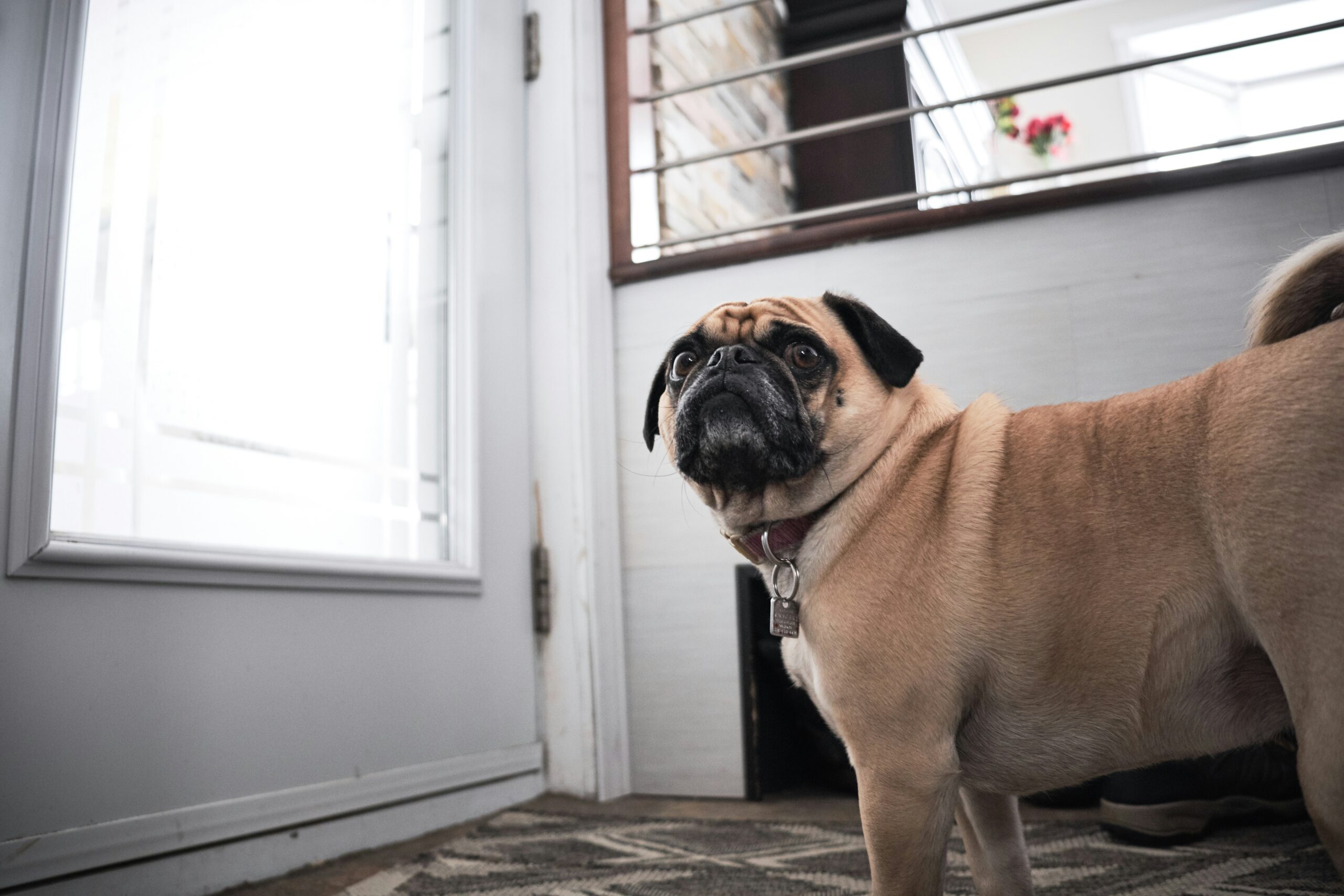
Firework season is one of the most stressful times of year for many dogs and their owners. From late October through to early November, and again at New Year, dogs across the UK are exposed to sudden, loud, unpredictable sounds that they have no way of making sense of or escaping from.
If your dog trembles, hides, pants, paces, destroys things, tries to escape, or simply cannot settle during fireworks, you are not alone. Noise phobia is one of the most common anxiety-related presentations in dogs, and fireworks are its most consistent trigger.
This guide covers what is happening for your dog when fireworks go off, what you can do to help them right now, and what longer-term support is available for dogs whose firework fear is severely affecting their quality of life.
🐾 Is your dog’s firework fear severe? Our dog behaviour consultations cover noise phobia and sound sensitivity as part of a comprehensive behaviour modification programme. Get in touch before the season peaks.
Why fireworks are so frightening for dogs
Dogs cannot be told that fireworks are harmless. They cannot look at a calendar and understand that the loud bangs will only last a few days. What they experience is a sudden, unpredictable, extremely loud noise that they cannot locate, cannot escape, and cannot control. For a species whose survival has always depended on detecting and responding to threat, this is a deeply stressful experience.
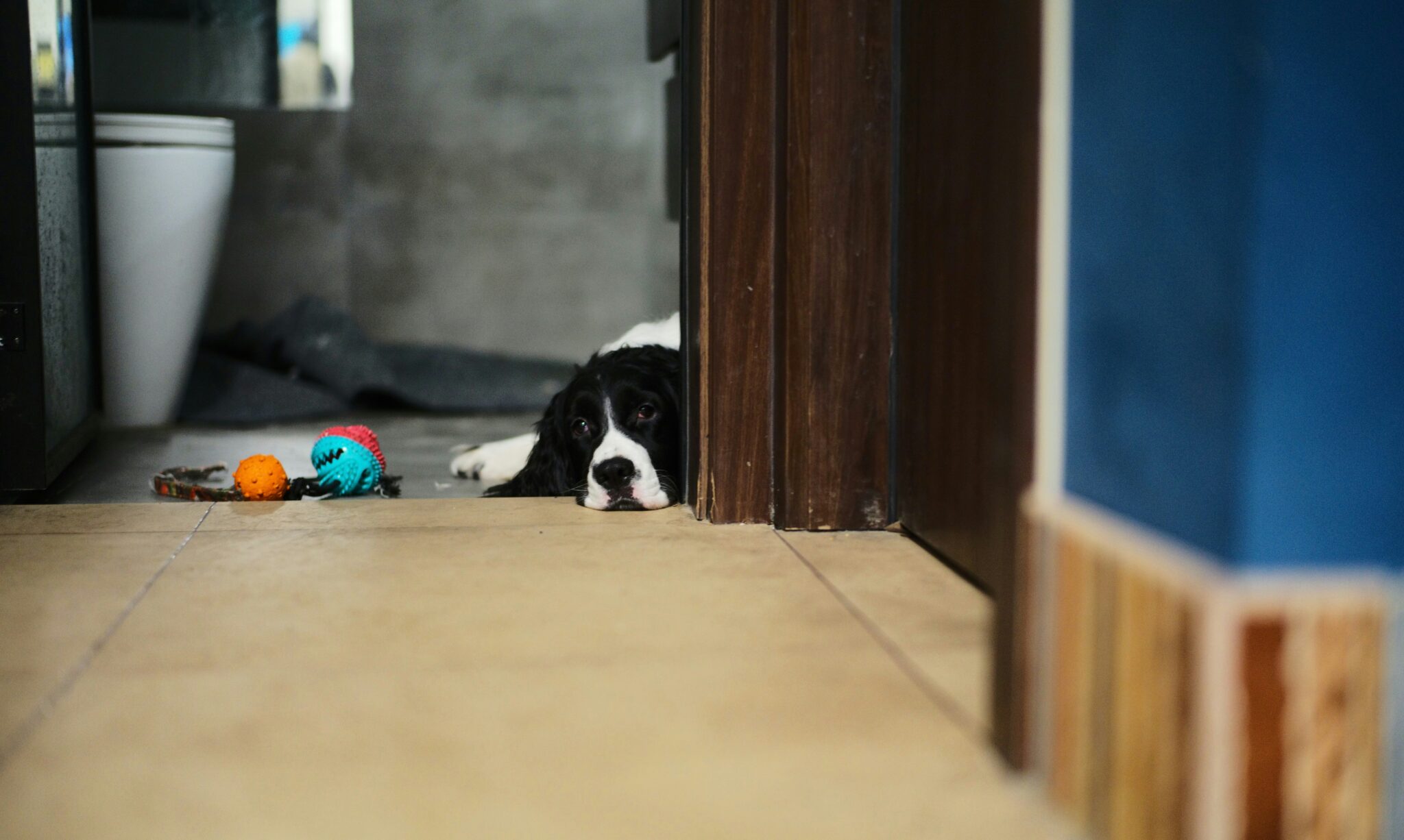
The unpredictability is a significant part of the problem. Research consistently shows that unpredictable aversive events cause more anxiety than predictable ones. A dog that hears a bang and does not know when the next one is coming, how loud it will be, or where it will come from is living in a state of chronic anticipatory anxiety throughout the fireworks period.
Some dogs are more sensitive to fireworks than others. Genetics plays a role, as does early experience. Dogs that were not exposed to a range of sounds during the critical socialisation window of 8 to 16 weeks may be more vulnerable. Dogs that have had a frightening experience during a fireworks event can develop a phobic response that intensifies year on year without intervention.
What not to do
There are several well-meaning responses to a frightened dog that can actually make things worse:
Do not ignore your dog completely. The old advice that comforting a frightened dog reinforces their fear has been comprehensively discredited by current behaviour science. You cannot reinforce a fear response. A dog that is genuinely frightened will not become more frightened because you offered comfort. Ignoring your dog when they are distressed is more likely to increase their anxiety than reduce it.
Do not force your dog to face the fireworks. Taking a noise-phobic dog outside during a fireworks display to show them the bangs are harmless is not desensitisation. It is flooding, and it is very likely to make the phobia significantly worse.
Do not tell your dog off for fear-related behaviour. A dog that destroys things, soils indoors, or barks during fireworks is not misbehaving. They are in genuine distress. Punishment adds a further layer of stress to an already overwhelming experience.
Do not assume they will get used to it. Noise phobia that is not actively addressed tends to worsen year on year as the dog’s nervous system becomes increasingly sensitised to the trigger. The season that was difficult last year is often worse this year without intervention.
What you can do to help your dog with fireworks right now
Create a safe den. Dogs instinctively seek enclosed spaces when frightened. Set up a crate, a space under a bed, or a quiet corner with blankets and familiar smelling items before the fireworks season begins. Let your dog choose whether to use it. Never confine them to a space they cannot leave freely, as this can increase panic. If you crate train your dog, keep the crate available with the door open throughout the fireworks period.
Muffle the sound. Close windows, draw curtains, and put on background noise such as music, television, or a white noise machine. This will not eliminate the sound but it reduces the sudden startle response that the sharp onset of each bang causes. Classic FM’s Pet Classics playlist and specially designed dog noise playlists on Spotify can be helpful.
Stay calm yourself. Dogs read human body language and emotional state extremely well. An owner who is anxious and vigilant during fireworks communicates to the dog that there is indeed something to be worried about. Behaving calmly and normally where possible is genuinely helpful.
Offer comfort if your dog seeks it. If your dog comes to you for reassurance, provide it calmly and quietly. Stroking a dog with long, slow strokes along the back has a measurably calming effect. You are not reinforcing the fear. You are providing the social support that is one of the most powerful stress buffers available to a social animal.
Use calming aids where appropriate. A pressure wrap such as a Thundershirt can reduce anxiety in some dogs. Adaptil (a synthetic version of the calming pheromone mother dogs produce) is available as a diffuser, spray, or collar and has reasonable evidence for reducing anxiety in some dogs. These work best when introduced before the stressful event rather than in the middle of it.
Manage your dog’s exposure. Walk your dog during daylight hours in the weeks around Bonfire Night. Check fireworks event listings in your area and plan walks around them. The Bonfirenight.net website often lists local events.
Speak to your vet. For dogs with moderate to severe firework phobia, veterinary support can make a significant difference. Short-term anxiolytic medication prescribed by your vet for the fireworks period can reduce the acute stress response and prevent the phobia from worsening year on year. Some medications need to be started before the event rather than on the night itself, so speak to your vet before the season begins.
Adaptil, Zylkene, and other calming products: do they work?
There are a significant number of calming products on the market with varying levels of evidence behind them. Here is an honest summary:
Adaptil (DAP): reasonably good evidence for reducing anxiety in some dogs, particularly in the diffuser form which needs to be switched on several days before the fireworks begin to build up to effective levels. Less reliable as a spot treatment on the night.
Zylkene: a casein-based supplement with some evidence for reducing anxiety. Needs to be started one to two weeks before the stressful event for best effect.
Thundershirt: effective for some dogs, particularly those with mild to moderate anxiety. Works on the principle of gentle, constant pressure similar to swaddling. No effect in others.
Valerian-based supplements: limited controlled trial evidence but anecdotally helpful for some dogs.
Melatonin: sometimes used for noise anxiety in dogs. Speak to your vet before using.
The honest answer is that no product works for every dog, and for dogs with significant noise phobia, products alone are not sufficient. They work best as part of a broader management plan and, in serious cases, alongside veterinary medication and a longer-term behaviour modification programme.
Longer term: desensitisation to fireworks sounds
For dogs with moderate to severe noise phobia, the most effective long-term intervention is a properly structured sound desensitisation programme. This involves exposing the dog to recordings of fireworks sounds at a very low volume where they show minimal or no anxiety, pairing those sounds with positive experiences, and very gradually increasing the volume over many sessions across several weeks or months.
This process takes significant time and must be done correctly to be effective. Played too loud, too soon, it will sensitise the dog further rather than reducing the phobia. It is best begun in the summer months, well before firework season begins, when there is time to work through the programme gradually.
Several sound therapy programmes are available, including the Dogs Trust Sound Therapy programme which offers free downloadable tracks specifically designed for this purpose at dogstrust.org.uk.
For dogs whose noise phobia is severe, affecting multiple areas of their life, or causing them to bolt or self-injure, a behaviour consultation is recommended alongside any desensitisation work. Get in touch to discuss your dog’s specific situation.
Keeping your dog safe during fireworks season
Every year, dogs are lost or injured during fireworks events after bolting in panic. Take the following precautions during the fireworks season:
- Ensure your dog is microchipped and their details are up to date on the database
- Keep your dog on a lead even in familiar areas during evening walks
- Do not leave your dog alone in the garden during fireworks events
- Check that your garden is securely fenced and gates are fastened
- Ensure your dog is wearing a collar with an ID tag
If your dog bolts and goes missing, contact your local dog warden, nearby vets, and local Facebook lost and found groups immediately. The sooner a missing dog is reported, the better the chances of a swift reunion.
Frequently Asked Questions: Help for Dogs Scared of Fireworks
Should I comfort my dog when they are scared of fireworks?
Yes. The outdated advice that comforting a frightened dog reinforces fear has been discredited by current behaviour science. You cannot reinforce a fear response. If your dog seeks comfort, provide it calmly and quietly. Ignoring a frightened dog does not help them feel braver. It simply means they face the experience without social support.
What is the best thing to give a dog for fireworks anxiety?
There is no single best answer as dogs respond differently to different interventions. A combination of a safe den, background noise, Adaptil diffuser started a few days before, and veterinary medication for dogs with significant anxiety tends to produce the best results. Speak to your vet before fireworks season begins to discuss medication options for your individual dog.
Can I give my dog human anxiety medication for fireworks?
No. Human medications such as diazepam and other anxiolytics are not appropriate for dogs without veterinary prescription and guidance. Some human medications are toxic to dogs. Always speak to your vet about appropriate veterinary medication for your dog’s specific situation.
My dog has always been fine with fireworks but is suddenly struggling. Why?
Noise sensitivity can develop or worsen at any age. Older dogs sometimes become more sensitive as their hearing changes. Dogs going through adolescence can become temporarily more reactive to sounds. A frightening experience during a previous fireworks season can trigger the development of a phobia. If the change is sudden and significant, a vet check to rule out pain or medical causes is a sensible first step.
Will my dog’s firework fear get better on its own?
Unlikely without active intervention. Noise phobia that is not addressed tends to worsen year on year as the dog’s nervous system becomes increasingly sensitised to the trigger. A structured desensitisation programme started well before firework season, combined with appropriate support during the events themselves, gives the best chance of meaningful improvement over time.
My dog tries to escape when fireworks go off. What should I do?
A dog that bolts in response to fireworks is at serious risk of injury or becoming lost. Ensure all exits are secure, keep your dog on a lead during evening walks throughout the fireworks season, and ensure they are microchipped with up-to-date contact details. For a dog with this level of response, veterinary medication during the fireworks period is strongly recommended, and a behaviour consultation to address the underlying noise phobia is advisable.
How do I desensitise my dog to fireworks sounds?
Desensitisation involves exposing your dog to fireworks sounds at a very low volume where they show minimal anxiety, pairing those sounds with positive experiences, and gradually increasing the volume over many weeks. The Dogs Trust offers a free sound therapy programme at dogstrust.org.uk. This process is most effective when started in the summer before fireworks season begins, not in October. For dogs with significant phobia, professional guidance is recommended.
When should I see a behaviourist about my dog’s fireworks fear?
If your dog’s response to fireworks is causing significant distress, affecting their welfare, or leading to dangerous behaviour such as bolting or self-injury, a behaviour consultation is the right step. Get in touch and we can discuss the best approach for your dog’s specific situation.






Comments are closed