Written by Adelaide Stewart-Jones, accredited dog trainer (IMDT, UK Dog Behaviour and Training Charter) and IAABC member. Founder of The Confident K9 in Kidderminster.
Every walk feels like a military operation. You scan ahead constantly, cross the road when you see a dog coming, and dread the moment your dog spots something before you do. The lunge, the bark, the pulling, the embarrassment, and the exhaustion of managing it every single day.
If this sounds familiar, I want you to know two things. You are not alone, and this is not your fault.
Reactivity is one of the most common reasons owners in Kidderminster and across Worcestershire contact me, and it is also one of the most misunderstood. This post explains what reactivity actually is, why your dog is doing it, and what the most effective approaches look like when we work on it properly.
🐾 Living with a reactive dog in Kidderminster or Worcestershire? Our dog behaviour consultations are designed for exactly this situation. Most clients see meaningful change within the first two sessions.
What is reactivity in dogs?
Reactivity is an exaggerated emotional response to a trigger in the environment. The most common triggers are other dogs, people (particularly strangers, children, or people in hats or uniforms), fast-moving objects like cyclists or joggers, and sudden sounds.
A reactive dog is not an aggressive dog, though reactivity can escalate to aggression if it is not addressed. Most reactive dogs are not trying to attack the thing they are reacting to. They are communicating one of two things: either they are frightened and trying to make the threat go away by appearing as scary as possible, or they are extremely frustrated because they cannot access something they desperately want to get to.
These are called fear-based reactivity and frustration-based reactivity, and while they can look identical from the outside, they have different emotional roots and require slightly different approaches. Getting this distinction right at the start is one of the most important things I do in an initial behaviour assessment.
Why is my dog reactive?
There is rarely a single cause. Reactivity is almost always the result of a combination of factors, and understanding which ones apply to your dog helps us build the right programme.
Gaps in early socialisation. The socialisation window closes at around 16 weeks. A puppy that had limited positive exposure to other dogs, people, or environments during that period is more likely to find those things overwhelming as an adult. This is particularly common in dogs that were isolated during the period their owners brought them home during lockdown, when normal socialisation opportunities were severely limited. I saw a significant rise in reactive dogs presenting to my practice in the years that followed.
A single significant negative experience. Some dogs develop reactivity after one frightening encounter, such as being attacked by another dog off the lead, being cornered or handled roughly, or experiencing something startling during a sensitive developmental period. The brain is wired to remember threatening experiences vividly and to be more cautious in future. This is a survival mechanism, not a character flaw.
Genetics and breed tendencies. Some dogs have a genetic predisposition toward vigilance, alertness, and a lower threshold for arousal. Herding breeds, guarding breeds, and terriers are commonly overrepresented in reactive dog populations, though any dog of any breed can develop reactivity. Genetics sets the threshold; experience and environment determine whether and how reactivity develops.
A history of rehearsal. Every time a reactive dog successfully makes a trigger go away by barking and lunging, that behaviour is reinforced. The dog learns that their strategy works. The more it is practised, the more ingrained it becomes, and the lower the threshold drops over time. This is one of the most important reasons to seek help early rather than hoping a dog will grow out of it.
Pain or underlying health issues. This is often overlooked. A dog that is in pain is a dog with a lower tolerance for stress. Orthopaedic pain in particular can cause dogs to become reactive or snappy because their threshold for discomfort has already been reached before they encounter any trigger. A veterinary health check is always part of the process before we begin behaviour work.
What reactivity looks like in practice
Reactive behaviour exists on a spectrum. At the lower end, a dog might stiffen, stare, and give a low growl. At the higher end, they are lunging, barking, spinning, and seemingly impossible to reach.
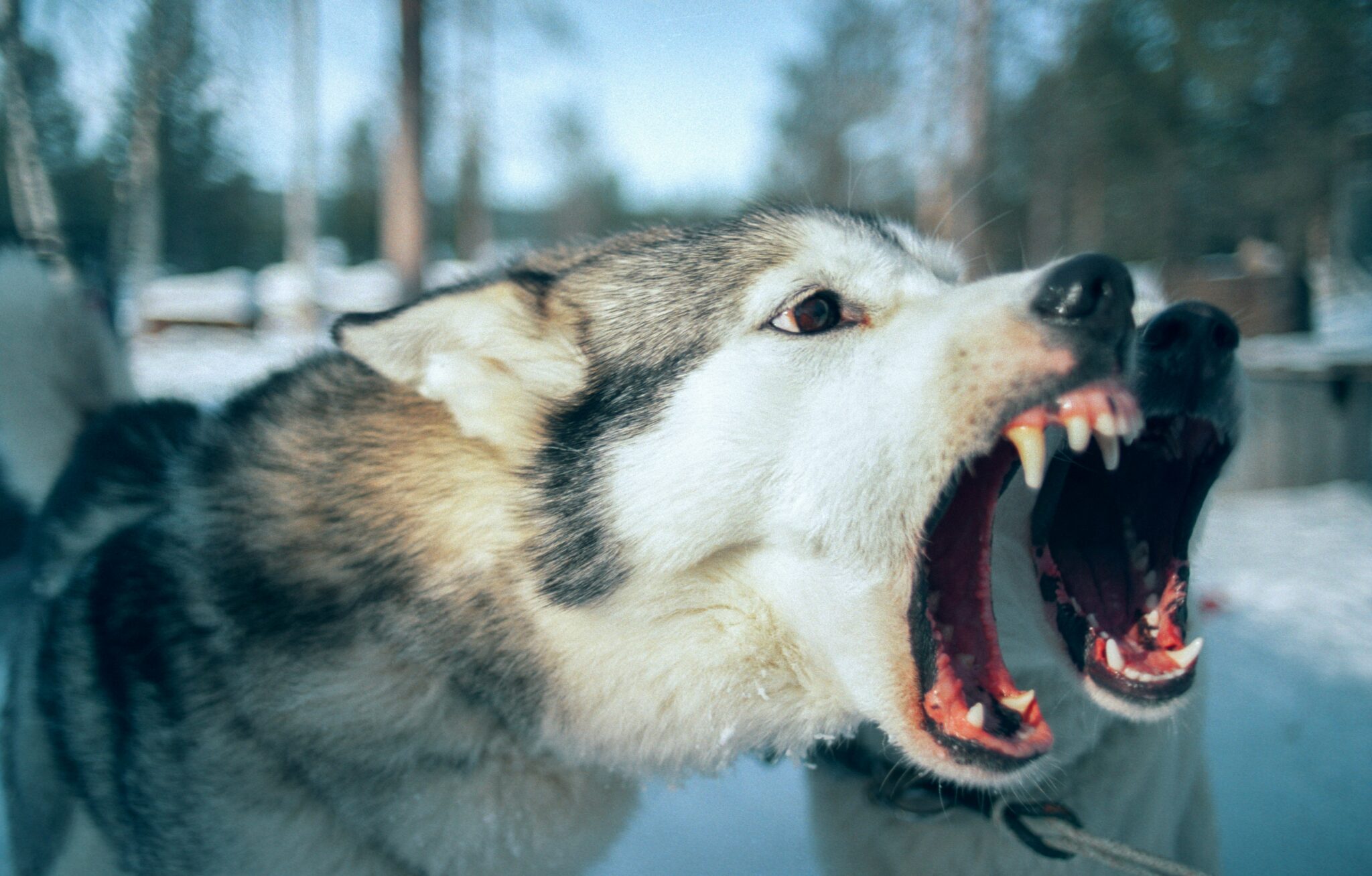
Understanding where your dog sits on that spectrum at any given moment is one of the most useful skills you can develop as their owner. In my consultations, we spend time helping owners read the early, subtle signals their dog gives before the explosion happens, because the earlier you can intervene, the more effectively you can change what happens next.
Common early warning signs to watch for:
- Body stiffening or stillness
- A hard, fixed stare at the trigger
- Ears rotating forward or pinning back
- Tail raising stiffly (a wagging tail does not always mean a happy dog)
- Mouth tightening or lips pulling back slightly
- Weight shifting forward onto the front feet
- Shallow, rapid breathing
By the time a dog is barking and lunging, the window for effective intervention has already closed for that moment. Our goal is to respond to the early signals, long before the dog reaches that point.
The threshold concept
Threshold is the point at which a dog tips from being aware of a trigger to being overwhelmed by it. Below threshold, a dog can think, learn, take treats, and respond to your cues. Above threshold, none of those things are reliably available to them because the emotional brain has taken over.
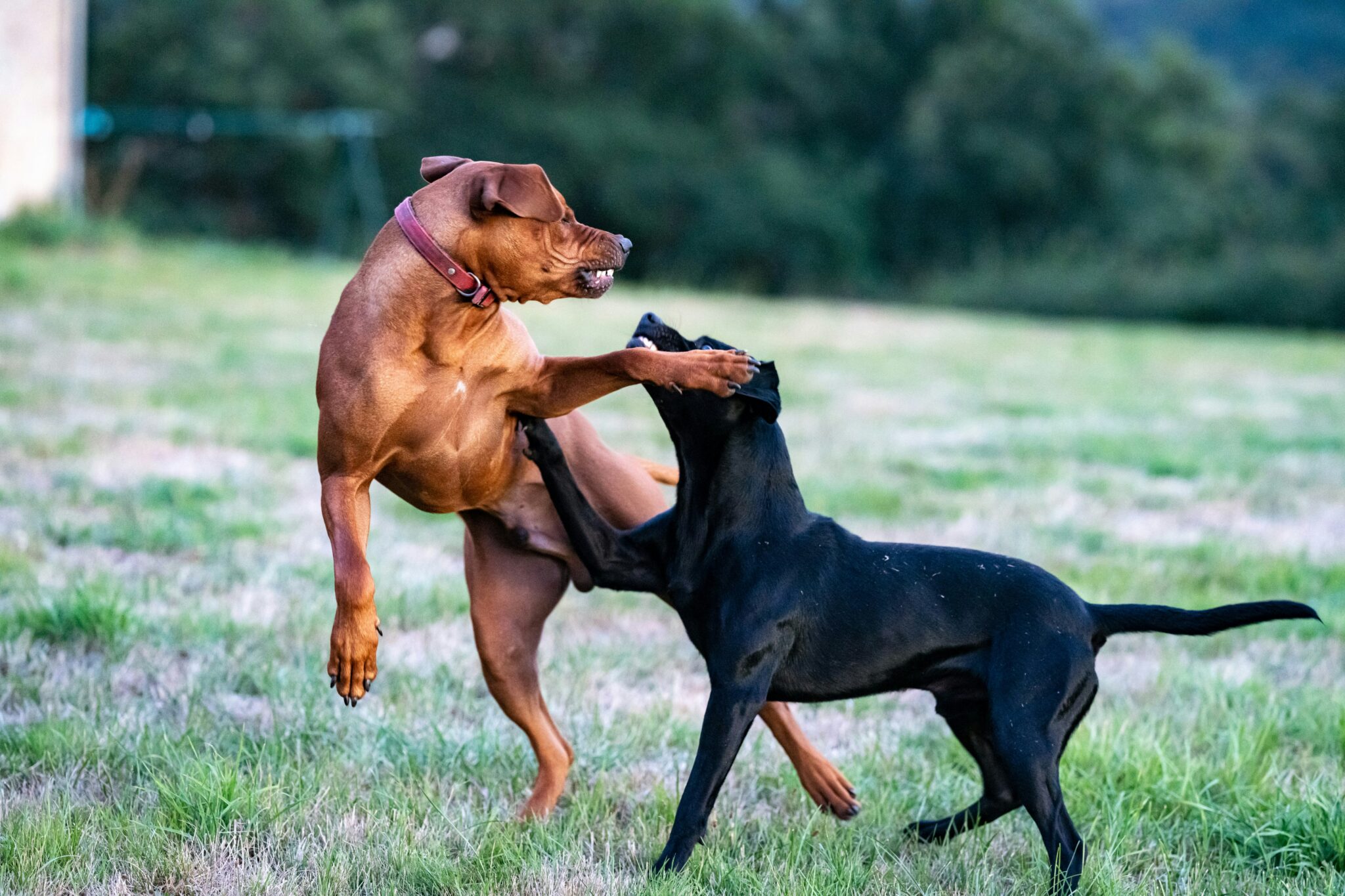
Most of the mistakes owners make with reactive dogs, usually without realising it, involve working above the dog’s threshold. You are at a distance where your dog is already too stressed to take a treat or hear their name, and no learning can happen in that state. All that happens is the reactive response is rehearsed again, the stress hormones spike again, and the threshold drops a little lower.
Working below threshold does not mean avoiding the trigger entirely. It means finding the distance or intensity at which your dog can register the trigger without being overwhelmed by it. That is the working distance, and it is different for every dog. Some dogs can work at 20 metres from another dog. Others need 100 metres, or to be around a corner so they can hear a dog but not see one. There is no wrong answer. The right distance is whatever allows your dog to remain thinking rather than reacting.
Over time, as the dog builds new, positive associations with the trigger at a safe distance, that distance gradually reduces. This process is called desensitisation and counter-conditioning, and it is the evidence-based foundation of reactive dog work.
What desensitisation and counter-conditioning actually means
Desensitisation means gradually exposing your dog to their trigger at an intensity low enough that they do not react, then very slowly increasing that intensity over many sessions. It is a process of building tolerance through controlled, repeated exposure at a level the dog can manage.
Counter-conditioning means pairing the trigger with something your dog finds genuinely wonderful, usually food, so that over time the trigger starts to predict good things rather than threatening things. The emotional response to the trigger shifts from fear or frustration to something closer to calm anticipation.
These two processes work together. The dog is below threshold (desensitisation) while also learning that the trigger predicts fantastic rewards (counter-conditioning). Across enough repetitions, the association changes at an emotional level, not just a behavioural one.
This is not a quick fix. It is a process that takes weeks to months depending on the dog, the history, and how deeply the reactive pattern is ingrained. But it produces lasting change rather than simply suppressing behaviour in the short term.
Management: your best friend while you work on the behaviour
Management means arranging your dog’s environment so that the reactive behaviour cannot be practised while you are working on changing it. It is not the same as training, and it will not fix the reactivity on its own. But it is essential during the behaviour modification process because every reactive episode reinforces the pattern you are trying to change.
Practical management strategies I use with clients include:
Walking at lower traffic times. Early morning or late evening walks significantly reduce the number of triggers your dog encounters. This alone can make a meaningful difference to stress levels.
Route planning. Choosing quieter routes, knowing where dogs are likely to appear, and having an escape plan for when you are caught off guard.
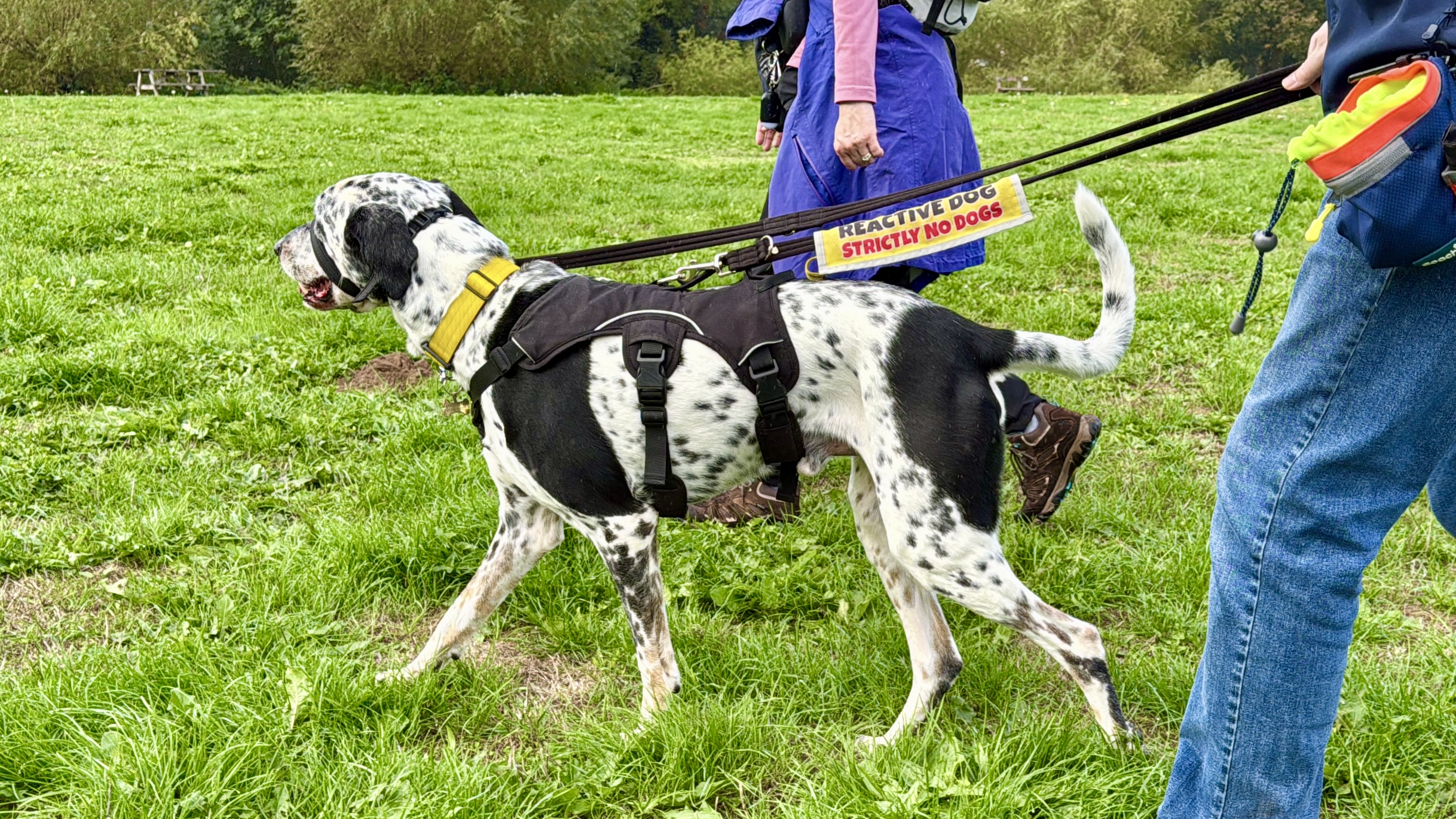
A well-fitted harness with a front clip. A front-clip harness reduces the mechanical advantage a dog has when pulling toward a trigger and gives you more control without putting pressure on the neck and throat, which can increase arousal.
A visual barrier. If your dog is reactive at the window or in the garden, managing access to those areas reduces the daily rehearsal of reactive behaviour.
Emergency U-turns. Teaching your dog a fast, cheerful U-turn cue so that when you see a trigger approaching, you can change direction smoothly before your dog reaches threshold. This is one of the first practical skills we work on in consultations.
Management is not failure. It is smart handling while the longer-term work takes effect.
What about punishment and aversive methods?
I want to address this directly because it comes up often, particularly with owners who have been told by someone, a previous trainer, a family member, a stranger in the park, that their dog needs to be “corrected” when it reacts.
Punishing a reactive dog for reacting does not address the underlying emotional state driving the behaviour. A dog that is barking because it is frightened does not become less frightened because it was jerked on the lead or shouted at. In most cases, the opposite happens. The dog now has an additional reason to feel anxious in the presence of its trigger: the punishment that follows.
There is also a significant risk that the punishment becomes associated with the trigger itself, creating a dog that is more fearful, not less, in situations that previously felt merely uncomfortable.
The research on aversive training methods and their effects on dog welfare is consistent and unambiguous. Force-free, reward-based methods are not simply a preference or a philosophy. They are the approach with the strongest evidence base and the lowest risk of making things worse. This is why every accrediting body I hold membership with, the IMDT, the IAABC, and the UK Dog Behaviour and Training Charter, requires commitment to force-free methods as a condition of membership.
Enrichment and supporting your reactive dog at home
Reactivity is not just a walk problem. A dog living in a state of chronic low-level stress will have a lower threshold everywhere, not just on the lead. Supporting your dog’s overall emotional wellbeing at home creates more capacity for them to cope when they do encounter triggers.
Sniff walks. Allowing your dog to set the pace and sniff freely on walks, rather than walking at a brisk pace with a tight lead, has a genuinely calming effect. Sniffing is neurologically settling for dogs. A 20-minute sniff walk in a quiet area provides more mental stimulation than a fast 40-minute march and leaves most dogs calmer and more satisfied.
Appropriate chew items. Chewing is a natural stress-relieving behaviour for dogs. Long-lasting natural chews, frozen food-stuffed toys, and lick mats engage the parasympathetic nervous system and encourage a calmer state. I recommend building a daily chewing habit for reactive dogs as part of the overall support plan.
Predictable routine. Dogs find predictability reassuring. Knowing when walks happen, when meals arrive, and what the daily pattern looks like reduces the background level of uncertainty that can contribute to reactivity. This does not mean a rigid timetable, but a broadly consistent shape to the day.
Mental enrichment. Nose work, scatter feeding, simple food puzzles, and training games all provide mental stimulation without the social exposure of walks. For dogs whose walks are currently limited due to reactivity, this becomes particularly important.
Rest. Overtired and overstimulated dogs have lower thresholds. Making sure your reactive dog gets genuine rest, particularly after any walk or exposure session, is part of the programme, not an afterthought.
When to seek professional help for your reactive dog
If your dog’s reactivity is affecting your daily life and your relationship with them, professional support is the right step. You do not need to wait until things reach a crisis point.
Specific situations where I would recommend contacting a behaviourist sooner rather than later:
- The reactivity is getting worse rather than staying the same
- Your dog has made contact with another dog or person
- The reactivity is happening at a distance where management is very difficult
- You have young children and the behaviour is creating a safety concern
- You have tried management strategies and made little progress
- The reactivity is accompanied by other concerning behaviours such as resource guarding or anxiety at home
A behaviour consultation begins with a thorough assessment of your dog’s history, environment, triggers, and current management. From there, we build a programme that is specific to your dog, not a generic protocol applied to every reactive dog in the same way. Every dog I work with gets a plan built around them.
If you are local to Kidderminster, in-person sessions are available within the area and up to a 15-minute drive. Home visits are available across Worcestershire. Online consultations are available UK-wide and internationally for English and French speakers.
View behaviour consultation packages and book online
Frequently Asked Questions: Reactive Dog Training
What is the difference between a reactive dog and an aggressive dog?
Reactivity is an exaggerated emotional response to a trigger, most commonly fear or frustration. Aggression involves intent to cause harm. Many reactive dogs have no intention of harming the thing they are reacting to. They are communicating that they are overwhelmed. Reactivity can escalate to aggression if it is not addressed, which is one of the reasons early intervention matters. A thorough behaviour assessment is the only way to properly distinguish between the two and plan accordingly.
Can reactive dogs be cured?
Most reactive dogs can make very significant, lasting improvements with the right programme consistently applied. Whether a dog reaches a point of having no reactive response at all depends on many factors including the severity of the reactivity, the history, the genetics, and how long the behaviour has been practised. For some dogs the goal is complete resolution. For others it is reliable management at a functional level. Both outcomes represent genuine success. I give every client an honest assessment of what is realistic for their dog rather than promises that may not hold.
How long does reactive dog training take?
This varies considerably between individual dogs. Some owners notice meaningful improvement within two to three sessions. Others are working on a programme over several months. The variables include how long the reactivity has been established, how severe it is, how consistently the owner can implement the programme between sessions, and the individual dog’s temperament. Progress is rarely linear. There will be good weeks and harder weeks. What matters is the overall trajectory.
Is it too late to help my older reactive dog?
No. Dogs can change their emotional responses at any age. Older dogs may have more deeply ingrained patterns, which can mean the process takes longer, but age is not a barrier to meaningful progress. I have worked with reactive dogs well into their senior years and seen genuine, lasting improvement.
My dog is fine off the lead but reactive on the lead. Why?
This is very common and is usually explained by one of two things. On the lead, your dog cannot use the full range of body language signals they would naturally use to communicate with another dog, which increases their anxiety. They also cannot flee if they feel threatened, which means their only option is to make the threat go away themselves. Off the lead, they have more control over the distance between themselves and the trigger, which reduces the feeling of being trapped. This distinction is diagnostically useful and shapes how we approach the training programme.
Should I let my reactive dog meet other dogs to help them get used to it?
In most cases, no. Forced greetings between a reactive dog and an unknown dog often make reactivity worse, not better. A dog that is already over threshold when it meets another dog is not building a positive association with that dog. It is rehearsing a stressful experience. Carefully controlled, structured exposure at a safe distance is a very different thing to a nose-to-nose greeting on a tight lead. Your behaviourist will guide you on what appropriate social exposure looks like for your specific dog.
What equipment helps with a reactive dog?
A well-fitted front-clip harness is generally the most useful piece of equipment for a reactive dog on the lead. It reduces pulling without putting pressure on the neck and throat, which can increase arousal and stress. A long line (a lightweight 5 to 10 metre training lead) is very useful for controlled exposure work at distance. Head collars can be helpful for some dogs but need to be introduced carefully and are not appropriate for every dog. I do not recommend retractable leads for reactive dogs as they provide no control at the moment it is needed most.
How is reactive dog training different from standard obedience training?
Standard obedience training focuses on teaching new behaviours and responses. Reactive dog training works at an emotional level, aiming to change how a dog feels about their trigger rather than simply what they do in response to it. You cannot obedience-train a dog out of reactivity by teaching better sits and stays. The emotional response drives the behaviour, so the emotional response is what we address. Obedience and impulse control work does play a supporting role, but it is not the primary tool.
Do I need a vet referral to start behaviour consultations?
Yes. Before beginning behaviour work with The Confident K9, I ask all clients to complete a vet health check and obtain a veterinary referral. This ensures any underlying medical factors contributing to the reactivity are identified and ruled out or addressed. Pain, thyroid conditions, and neurological issues can all influence behaviour, and a vet assessment is always worth doing before beginning a behaviour programme. You can download the referral form here.
How do I book a reactive dog consultation in Kidderminster?
View our behaviour consultation packages and book securely online. Once your booking is confirmed, you will receive your intake forms and the veterinary referral form to complete before your first session. If you have questions before booking, you are very welcome to get in touch first.
Related articles
- Dog Behaviour Consultations in Kidderminster and Worcestershire
- Dog Behaviourist Kidderminster | Expert Behaviour Support for Your Dog
- Dog Behaviour Tips: Barking, Recall, Separation Anxiety and More
- Confidence Building for Anxious Dogs: The Sound Box Exercise
- Your Dog’s Gut Microbiome and Behaviour: What the Science Actually Says






Comments are closed