By Adelaide Stewart-Jones, accredited dog trainer (IMDT, UK Dog Behaviour and Training Charter) and IAABC member. Founder of The Confident K9 in Kidderminster.
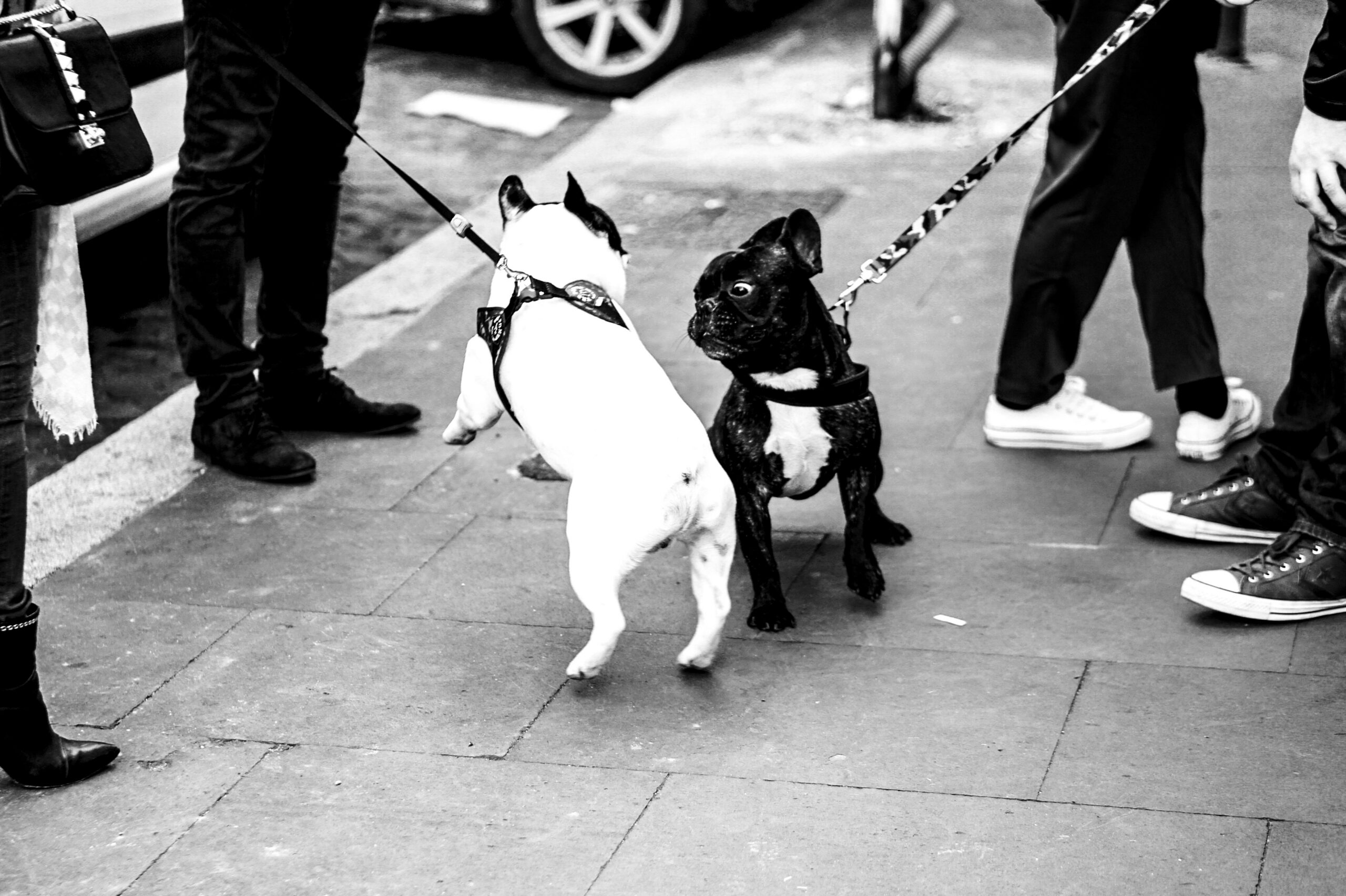
If your dog lunges, barks, snaps, or fights with other dogs, every walk becomes an exercise in damage limitation. You scan ahead constantly, dread dog walkers coming round corners, and feel a mixture of frustration, embarrassment, and genuine worry about what might happen if your dog gets close to another dog.
Dog aggression towards other dogs is one of the most common behaviour presentations I work with in Kidderminster and across Worcestershire, and it is also one of the most misunderstood. This post explains why dogs become aggressive toward other dogs, what is actually driving the behaviour, and what a professional behaviour programme looks like for dogs with this issue.
🐾 Does your dog show aggression towards other dogs? Our dog behaviour consultations are designed for exactly this situation. In-person sessions in Kidderminster and Worcestershire, and online across the UK.
Is it aggression or reactivity?
The terms aggression and reactivity are often used interchangeably, but they describe different things and the distinction matters clinically.
Reactivity refers to an exaggerated emotional response to a trigger. A reactive dog barks, lunges, and appears out of control when they see another dog, but their goal is usually to increase the distance between themselves and the trigger, not to make contact. Reactivity is most commonly rooted in fear or frustration.
Aggression involves intent to cause harm or to control through threat. A truly aggressive dog is seeking to inflict damage rather than simply to drive the other dog away.
In practice, many dogs presented as aggressive toward other dogs are primarily reactive, and understanding which is driving the behaviour shapes the entire treatment plan. A thorough behaviour assessment is the only reliable way to make this distinction accurately.
Why does dog aggression towards other dogs develop?
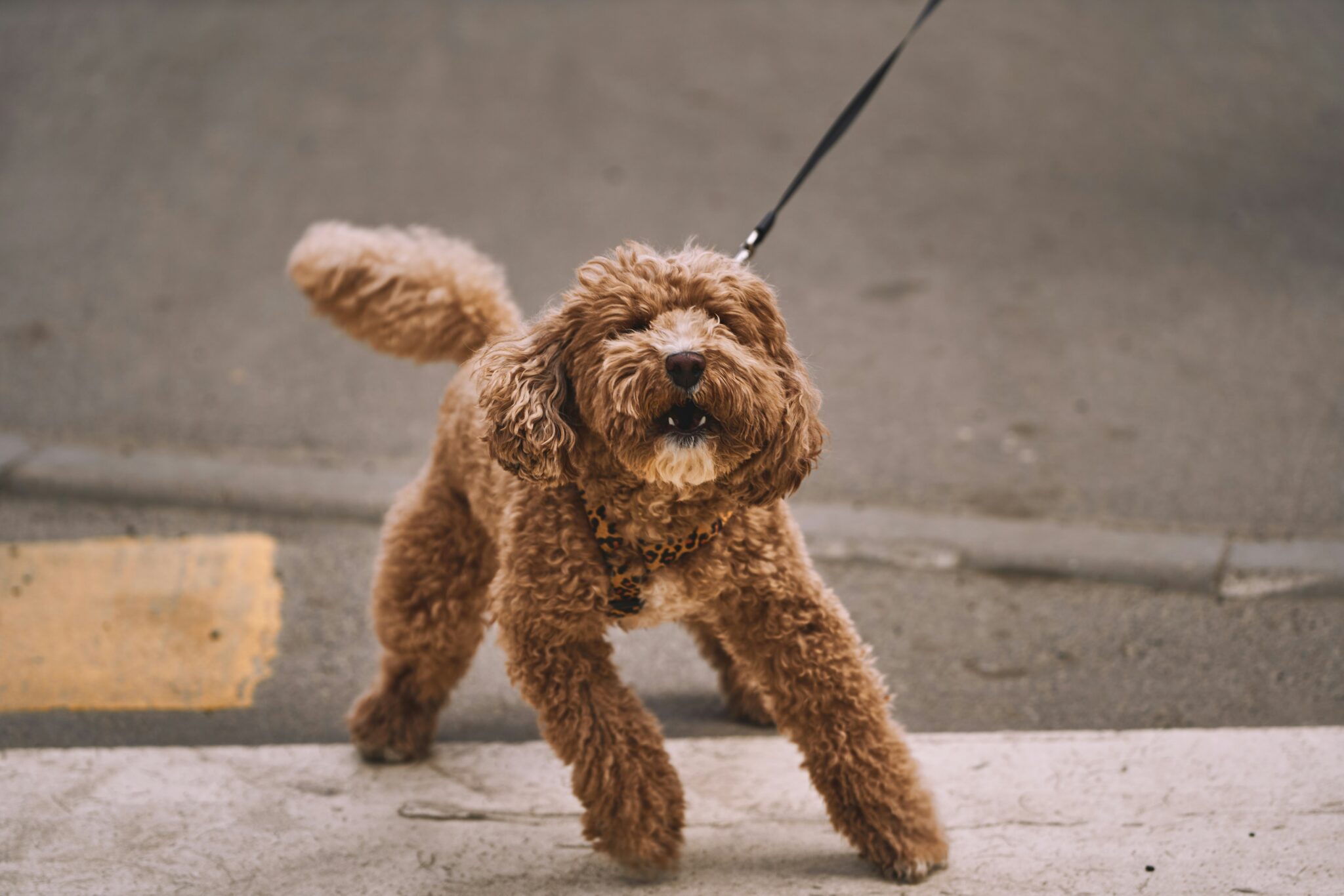
There is rarely a single cause. Dog-to-dog aggression is almost always the result of a combination of factors:
Fear. The most common driver of dog-to-dog aggression is fear. A dog that is frightened of other dogs has learned, through experience or temperament, that other dogs are threatening. Aggression is their attempt to make the threat go away. The behaviour is defensive rather than predatory.
Frustration. Some dogs are highly socially motivated and become intensely frustrated when they cannot access other dogs. This frustration-based reactivity can look identical to fear-based aggression from the outside but has a very different emotional root. These dogs are often fine or even overly enthusiastic when they do reach other dogs off the lead.
Poor socialisation. Dogs that had limited positive exposure to other dogs during the critical socialisation window of 8 to 16 weeks are more likely to find other dogs threatening or confusing as adults. They lack the social fluency to read and respond appropriately to canine body language.
A single significant negative experience. A dog attack, even a relatively minor one, can fundamentally change how a dog perceives and responds to other dogs, particularly if it occurred during a developmental sensitive period.
Pain. A dog that is in pain has a lower threshold for everything, including other dogs getting too close. Orthopaedic conditions in particular can cause a previously sociable dog to become intolerant of other dogs approaching or making contact. This is one of the reasons a veterinary health check is always part of our assessment process.
Rehearsal. Every time a dog successfully drives another dog away through aggressive behaviour, that behaviour is reinforced. The dog learns that their strategy works. Over time, the behaviour becomes more immediate, more intense, and triggered at greater distances.
On-lead frustration. Many dogs that are reactive or aggressive on the lead are perfectly fine off the lead. Being on a lead removes a dog’s ability to use natural avoidance strategies and flight. Unable to create distance by moving away, the dog uses aggression instead. This is sometimes called barrier frustration or leash reactivity and is extremely common.
What dog-to-dog aggression looks like
Dog-to-dog aggression exists on a spectrum. At the lower end, a dog may stiffen and stare when they see another dog across the street. At the higher end, a dog may attack other dogs on sight with little warning. Most dogs presenting for behaviour support sit somewhere in the middle.
Early signals:
- Body stiffening on sight of another dog
- A fixed stare with a high, rigid tail
- Weight shifting forward onto the front feet
- Ears rotating forward
- A low, quiet growl
Escalating signals:
- Barking, lunging, and pulling hard toward the other dog
- Hackles raised along the back
- Snapping or air snapping if the other dog comes close
- Fighting if contact is made
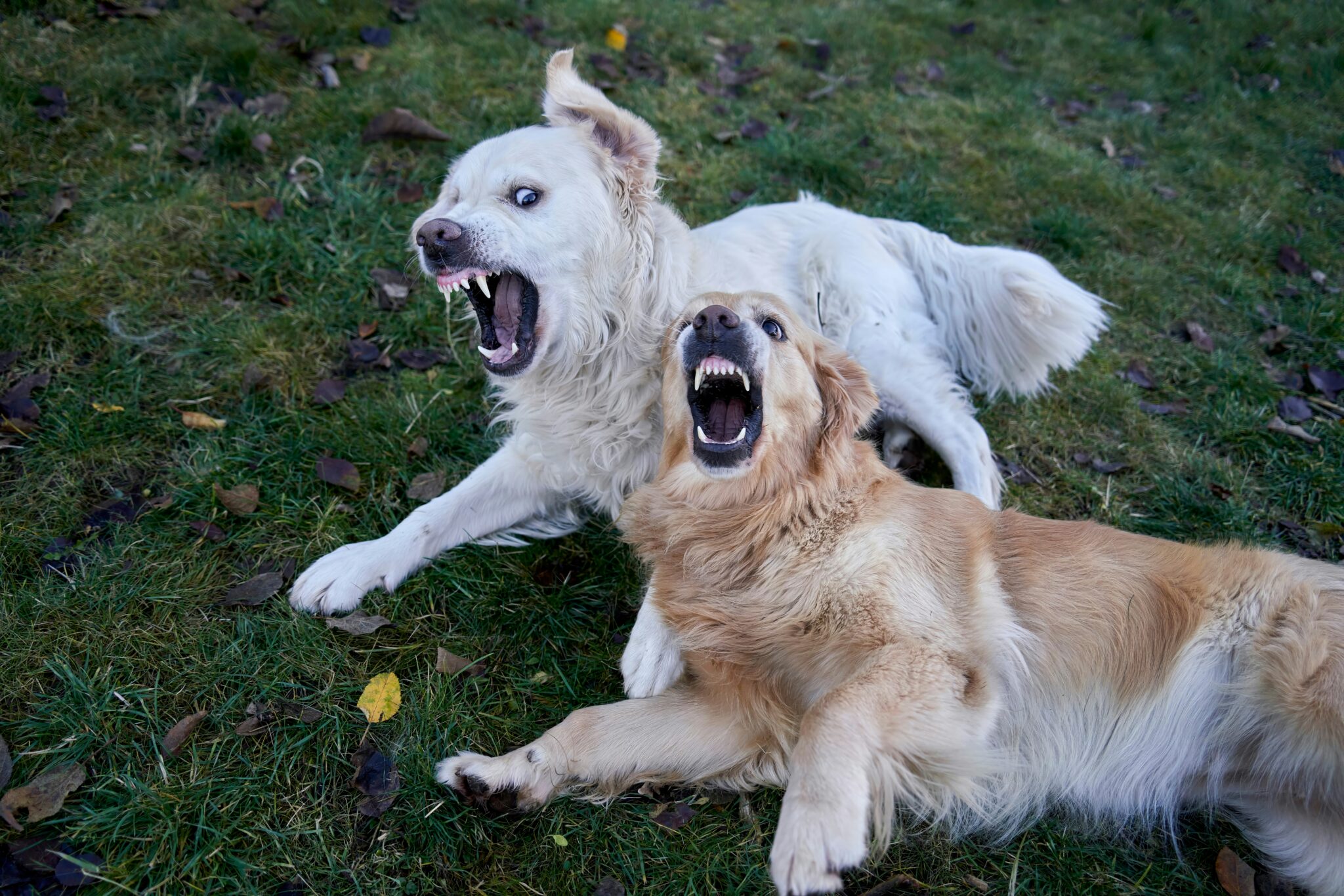
Understanding where your dog is on this spectrum, and how quickly they escalate between levels, is central to designing the right behaviour programme.
What not to do
Do not use punishment to suppress the aggression. A dog that is punished for growling or lunging at other dogs does not become less anxious about other dogs. They become more anxious, and they may stop giving warning signals before escalating. This is one of the most dangerous things that can happen with a dog-to-dog aggression case.
Do not force greetings. Putting a dog-aggressive dog nose-to-nose with another dog does not teach them that dogs are safe. It confirms the opposite, while also creating a situation where a bite can occur.
Do not use a retractable lead. Retractable leads offer no control at the moment when control is most needed and can escalate tension between dogs significantly.
Do not assume your dog will grow out of it. Dog-to-dog aggression that is not addressed tends to become more established over time, not less. Early intervention gives the best outcomes.
How dog-to-dog aggression is treated
Treatment depends entirely on what is driving the behaviour for the individual dog. There is no generic protocol that works for every dog-aggressive dog, which is why a thorough behaviour assessment is always the starting point.
For most cases, the programme involves a combination of:
Management. Arranging the dog’s environment and walks to minimise the number of reactive incidents while the behaviour modification work takes place. This might include walking at quieter times, choosing lower-traffic routes, using visual barriers, or teaching an emergency turn-away cue.
Desensitisation. Gradually exposing the dog to other dogs at a distance and intensity where they can remain calm, then very slowly reducing that distance as the dog’s emotional response improves. This is painstaking work that cannot be rushed.
Counter-conditioning. Pairing the sight of other dogs with something the dog finds genuinely wonderful, so the emotional association shifts from negative to positive over time. The goal is a dog whose first response on seeing another dog is to look at you for a treat rather than to lunge forward.
Foundation training. Building reliable attention, an emergency turn-away cue, and impulse control exercises that give both the dog and the handler tools to use in real-world situations.
Veterinary support where appropriate. In some cases, medication to reduce the dog’s baseline anxiety significantly improves the effectiveness of the behaviour modification work.
For on-lead dog-to-dog aggression, private hired dog fields can be a genuinely useful tool during the treatment process, allowing controlled exposure work in a secure environment with no unexpected encounters. See our guide to secure dog fields near Kidderminster for local options.
When to seek professional help
If your dog is showing aggression toward other dogs, professional behaviour support is the right step. This is not a behaviour that responds reliably to generic training advice or management alone.
Consider seeking help as a priority if:
- Your dog has made contact with another dog
- The aggression is getting worse rather than staying the same
- The aggression is triggered at increasing distances
- The situation is affecting your ability to exercise your dog
- You are feeling anxious or unconfident handling your dog
At The Confident K9, dog-to-dog aggression is one of the most common presenting behaviours we work with. Every case begins with a thorough assessment and results in a fully personalised behaviour modification plan built around your specific dog. We work exclusively with reward-based, force-free methods and never use punishment, aversive equipment, or any technique that adds to a dog’s stress.
Before beginning behaviour work, all clients complete a vet health check and provide a veterinary referral. You can download the referral form here.
View behaviour consultation packages and book online
Frequently Asked Questions: Dog Aggression Towards Other Dogs
Is my dog aggressive or reactive?
Reactivity is an exaggerated emotional response, usually rooted in fear or frustration, that aims to increase distance between the dog and the trigger. Aggression involves intent to cause harm or to control through threat. Many dogs presented as aggressive are primarily reactive. A behaviour assessment is the only reliable way to distinguish between the two.
Can dog-to-dog aggression be resolved?
Most dogs with dog-to-dog aggression make significant, meaningful progress with the right behaviour modification programme. Whether a dog reaches the point of being fully relaxed around all other dogs in all contexts depends on the individual dog, the history, and the severity of the behaviour. The goal is always a dog that can be managed safely and comfortably in everyday life.
My dog is fine with dogs they know but aggressive to unknown dogs. Is this normal?
Yes, this is a very common pattern. Dogs that are familiar with each other have established a social relationship and know what to expect from one another. Unknown dogs represent unpredictability, which triggers anxiety or heightened vigilance. This pattern often indicates a primarily fear-based or frustration-based presentation rather than generalised aggression.
Should I use a muzzle on my dog-aggressive dog?
A well-fitted muzzle used correctly is a sensible safety tool for a dog-aggressive dog. It does not fix the underlying behaviour but it significantly reduces the risk of injury to other dogs during the period when behaviour modification work is taking place. We can advise on muzzle training as part of a behaviour consultation.
My dog was attacked by another dog and is now aggressive. Will they get better?
Yes, in most cases. Post-traumatic reactivity following a dog attack is extremely common and responds well to a properly structured behaviour modification programme. The prognosis is generally positive, particularly when the incident is recent and intervention begins quickly.
Can I bring my dog-aggressive dog to group training classes?
In most cases, group classes are not appropriate for a dog with significant dog-to-dog aggression. The close proximity to other dogs, the unpredictability of the environment, and the group format make it very difficult to work below the dog’s threshold, which is a prerequisite for effective behaviour modification. One-to-one sessions are almost always the better starting point.
Do you use shock collars or prong collars for dog aggression?
Never. These methods suppress behaviour through pain and fear and do not address the underlying emotional state driving the aggression. The evidence consistently shows that aversive methods worsen anxiety-based aggression and increase the risk of uninhibited biting. Every method we use is reward-based and rooted in current canine behaviour science.
How do I book a consultation for dog aggression in Kidderminster?
View our behaviour consultation packages and book securely online. If you would like to discuss your dog’s situation first, get in touch and we will help you find the right starting point.






Comments are closed