

I had the pleasure of sitting down with the team at Skippers Pet Products for an in-depth Q&A session answering real questions from real dog owners. The questions that came in covered everything from barking and recall to separation anxiety, car travel, and a couple of topics that do not often get talked about openly.
The full video is below. Beneath it, I have written out my answers in full so you can read, save, and refer back to the advice without having to rewatch the video every time.
Jump to the question you need:
- How do I stop my dog barking when someone leaves?
- My dog will not stop barking in the garden in the evenings
- Why does my dog prefer to walk in one direction?
- How do I stop my dog wandering off?
- My dog is distressed on car journeys but happy to get in the vehicle
- What are the best ways to help with separation anxiety?
- Why does my dog behave differently with different people?
- How do I stop my dog eating their own poo?
- How do I stop my dog chasing my cats?
How do I stop my dog barking when someone leaves?
This is one of the most common dog behaviour questions I get asked, and it is important to distinguish between two very different things that can look identical from the outside.
The first is attention-seeking barking. The dog barks when someone leaves because barking has previously been rewarded, even unintentionally, by the person coming back, looking at the dog, or responding in some way. The behaviour has been reinforced and the dog has learned that barking works.
The second is the early signs of separation anxiety. The dog is genuinely distressed when left and the barking is a symptom of that distress rather than a strategic behaviour.
The approach for each is quite different. For attention-seeking barking, the most effective strategy is to remove the reward entirely. Leave calmly, do not respond to barking on your return, and reward calm settled behaviour instead. For separation anxiety, the process is more graduated and involves systematic desensitisation to your departure cues over time.
If you are not sure which you are dealing with, setting up a camera to record your dog while you are out is enormously helpful. A dog that settles within a few minutes of you leaving is most likely displaying attention-seeking behaviour. A dog that remains distressed throughout is showing signs of separation anxiety and will need a different approach.
🐾 Need help with this? Our dog behaviour consultations cover both attention-seeking barking and separation anxiety as standard. Most clients see meaningful improvement within the first two sessions.
My dog will not stop barking in the garden, but only in the evenings
The time-specific nature of this one is actually a really useful clue. Dogs are highly attuned to their environment, and evening brings a specific set of triggers that daytime does not: wildlife becoming more active, neighbours returning home, changes in sound as traffic dies down and ambient noise drops, and reduced visibility which can make dogs more alert to movement and sound.
The most common cause of this pattern is territorial or alert barking. Something is triggering the dog in the environment during that specific window, and the dog is responding to it.
The most practical immediate strategies are to manage access to the garden in the evenings during the period you are working on the behaviour, interrupt and redirect before the barking escalates rather than after, and reward your dog generously for being in the garden calmly without barking.
Longer term, you want to work on teaching your dog that the things that trigger the barking predict good things rather than warranting a vocal response. This is called counter-conditioning and it is more effective than simply trying to suppress the barking.
What does not work, and often makes things worse, is shouting at your dog to be quiet. From the dog’s perspective, you are joining in.
Why does my dog prefer to walk in one direction?
This one surprises people because it sounds like a quirk, but there is usually a straightforward explanation. Dogs are creatures of habit and they find predictability reassuring. If your regular walks have consistently gone in one direction, your dog has built a strong expectation around that route. Deviating from it removes the predictability they have come to rely on.
There can also be an avoidance element. If the preferred direction consistently leads away from something the dog finds uncomfortable, such as a dog that regularly barks from a garden on the other route, or a road junction that is noisier, the dog may have learned to favour the direction that feels safer.
The solution is gradual. Introduce variation slowly, pair the less preferred direction with very high-value rewards at the point where the dog typically tries to turn, and keep initial forays in the new direction short and positive before building duration.
How do I stop my dog wandering off? I am terrified of losing her
Recall is one of the most important skills you can teach your dog and one of the most commonly undertrained. The reason most dogs have unreliable recall is not disobedience. It is that the environment has become more rewarding than coming back to you.
The foundation of reliable recall is making yourself the most rewarding thing in your dog’s world at the moment you call. That means:
Never calling your dog to you for something they find unpleasant, such as the end of a walk, being put on the lead, or being told off. If coming to you reliably predicts something bad, recall will break down.
Rewarding recall generously every single time, particularly in the early stages. The reward needs to match the ask. If you are competing with interesting smells, other dogs, and freedom, a dry treat is unlikely to win. Cooked chicken, cheese, or a brief game with a toy are more likely to compete.
Practising in low-distraction environments first and building to higher distraction gradually. Many owners practise recall in the park, which is one of the hardest environments possible for a dog to disengage from. Start at home, then the garden, then a quiet road, then a quiet park, before expecting reliability in a busy off-lead area.
Using a long line during the training period so your dog cannot practise ignoring the recall cue. Every time a dog ignores a recall and carries on doing what they were doing, the behaviour of ignoring the cue is being rehearsed and strengthened.
A good recall is built over months, not days. It is worth the investment.
🐾 Recall is one of the topics we cover in our 1:1 dog training packages. If your dog’s recall is unreliable, a single focused session often produces a significant shift.
My dog is distressed on car journeys but happy to get in the vehicle
This is a really interesting one because the two parts seem contradictory until you understand what is actually happening.
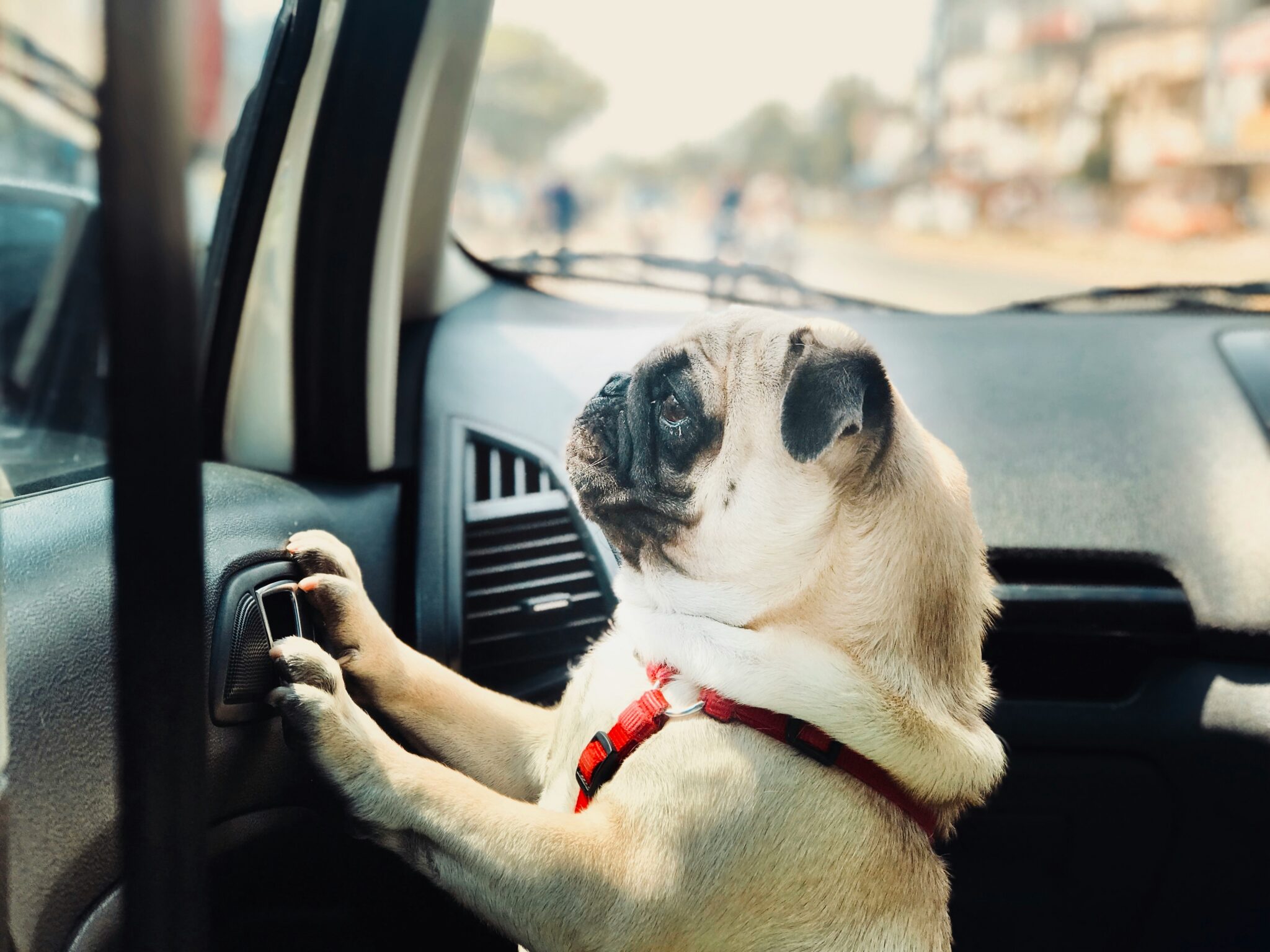
A dog that is happy to get into the car has a positive association with the car itself, possibly because it has been rewarded for getting in, or because getting in has historically led to good things like walks. The distress during the journey is a separate issue entirely and usually comes down to one or more of the following: motion sickness, anxiety about where the journey is going, or insufficient habituation to the movement, sounds, and sensations of a moving vehicle.
Motion sickness in dogs is more common than most owners realise and does not always present as vomiting. Drooling, yawning, restlessness, and whining during journeys can all be signs of nausea rather than anxiety, though the two can also co-exist and make each other worse.
The approach involves short, positive car experiences that do not lead anywhere particularly significant so the dog does not build an anticipatory anxiety response, ensuring the dog is well-secured and comfortable (loose dogs in cars can feel more unstable and anxious), and speaking to your vet if motion sickness is suspected, as there are effective medications that can help during the desensitisation process.
What are the best ways to help with dog separation anxiety?
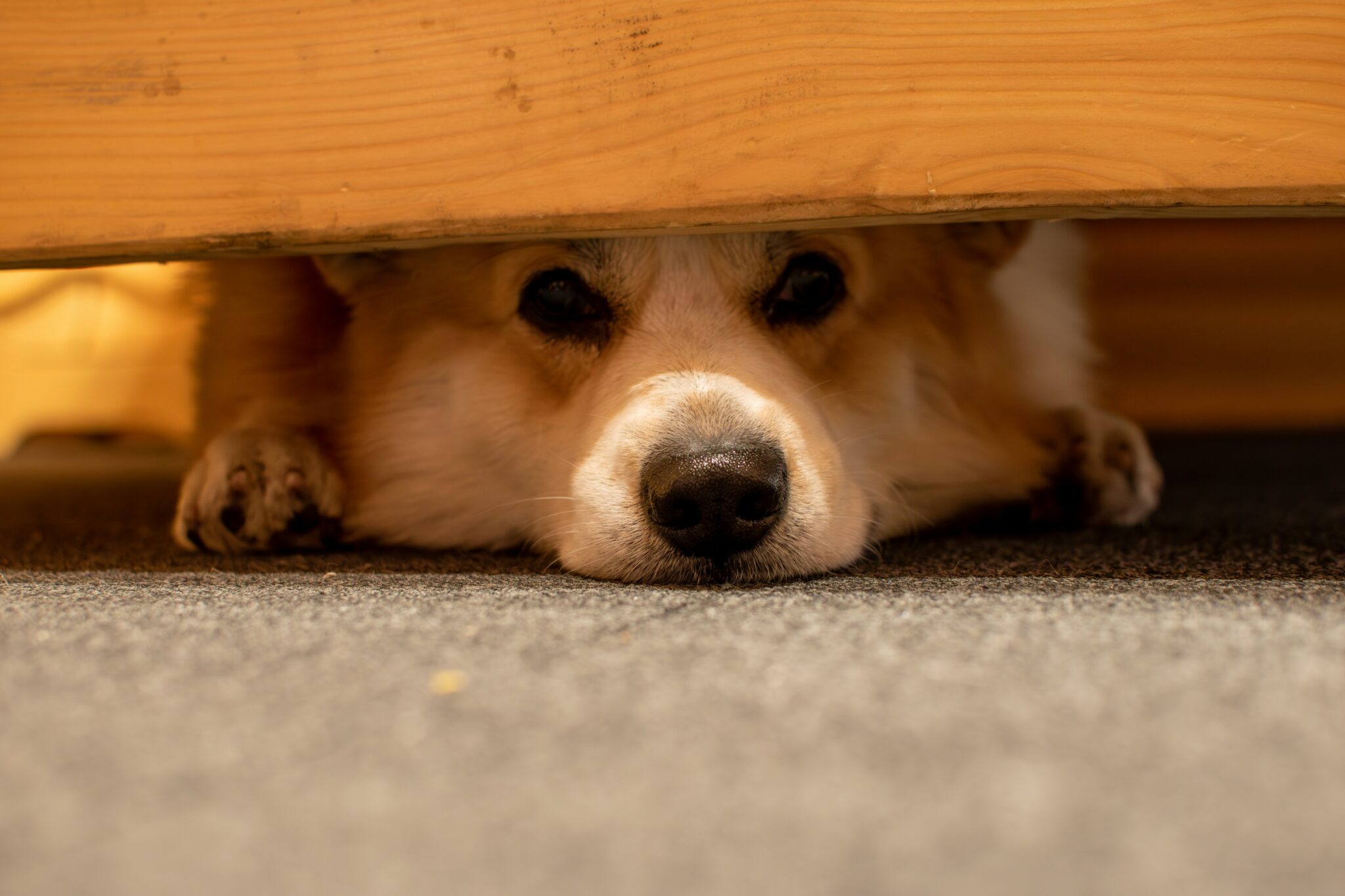
Separation anxiety is a clinical condition, not a training problem, and it is worth being clear about that distinction because it changes the approach significantly. A dog with true separation anxiety is in a state of genuine distress when left alone and cannot simply be trained out of that distress through standard obedience work.
The most effective approach is a systematic, graduated programme of teaching the dog that being alone is safe. This involves:
Starting from a point where the dog is completely comfortable, which for some dogs means beginning with the owner simply leaving the room for a few seconds.
Building alone time incrementally, never pushing the dog beyond the point at which they remain calm. One bad experience can set back weeks of progress.
Managing the dog’s alone time throughout the programme so they are not regularly being left beyond their current threshold while you are working on it. This is one of the hardest parts for owners practically, but it is essential.
Addressing any underlying anxiety more broadly, which may include veterinary support and in some cases medication alongside the behaviour programme.
For a full breakdown of how we approach separation anxiety, see our dedicated separation anxiety page.
Why does my dog behave differently with different people?
Because dogs are incredibly observant and highly context-specific learners. They do not generalise rules the way humans do. A dog that has learned that jumping up at one family member gets an enthusiastic response will jump at that person. The same dog, having learned that jumping at another person gets them turned away from, will not jump at that person. These are not contradictory behaviours from the dog’s perspective. They are two separate learned responses to two separate sets of consequences.
This is why consistency across everyone who interacts with your dog is so important, particularly during the training period. If one person in the household reinforces a behaviour that everyone else is trying to extinguish, the behaviour will persist.
It is also worth noting that dogs read body language, energy, and routine extremely well. A dog may behave very differently with a confident, calm handler than with an anxious or inconsistent one. This is not the dog being manipulative. It is the dog responding accurately to the information they are receiving.
How do I stop my dog eating their own poo?
Coprophagia, the technical term for this behaviour, is more common than most owners want to admit and there are several possible causes. In puppies, it is often exploratory and many grow out of it. In adult dogs, it can be linked to dietary insufficiency, boredom, a learned behaviour from puppyhood, or in some cases an attempt to keep the environment clean, which is an instinct retained from den-dwelling ancestors.
The most important first step is a veterinary check to rule out any nutritional deficiency or digestive issue. If the behaviour is behavioural rather than medical, the most practical strategies are:
Removing the opportunity by clearing the garden promptly after toileting so the resource is not available.
Interrupting and redirecting before the dog reaches the poo, then rewarding heavily for leaving it and coming away.
Ensuring the dog’s diet is complete and nutritionally appropriate for their life stage.
There are various products marketed as deterrents to add to food, with varying reported success. The evidence base for most of them is anecdotal, but some owners find them helpful alongside management.
How do I stop my dog chasing my cats?
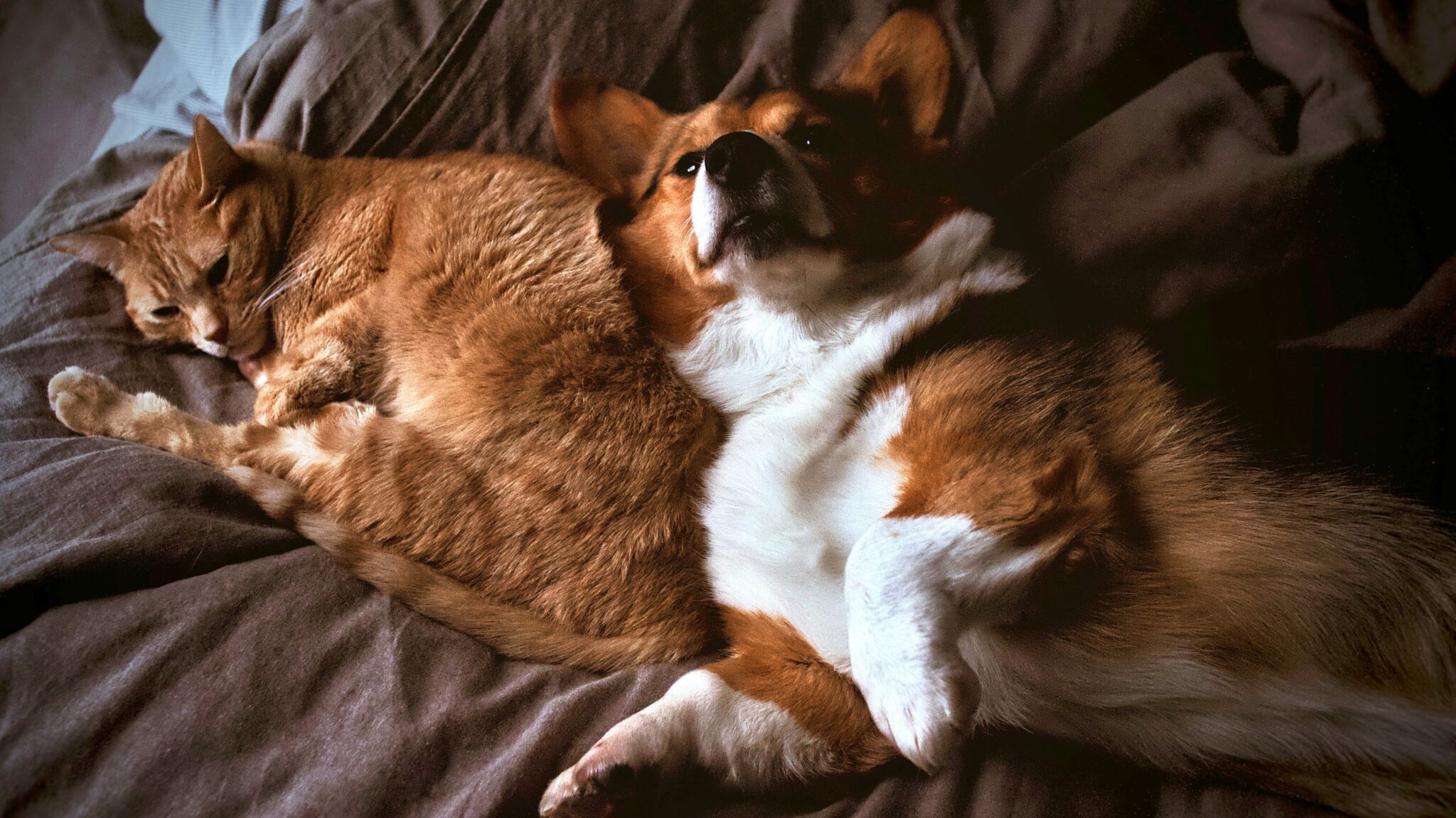
Chase is one of the most self-reinforcing behaviours in dogs because the act of chasing is inherently rewarding regardless of the outcome. The cat running away is the reward. This means that every successful chase makes the next one more likely, and management during the training process is not optional, it is essential.
The approach has three components.
First, prevent the chase from happening. Baby gates, separate spaces, and supervised interactions only until reliable behaviour is established. A dog that cannot practise chasing cannot rehearse and strengthen the behaviour.
Second, build a reliable incompatible behaviour. A dog that will orientate to you on cue cannot simultaneously be chasing the cat. Teaching a solid recall and a reliable “look at me” cue, both reinforced heavily, gives you tools to redirect the dog before the chase begins.
Third, work systematically on reducing the cat’s value as a trigger. This is done at a distance where the dog can notice the cat but remain calm, rewarding the dog heavily for calm, neutral behaviour in the cat’s presence, and gradually decreasing the distance over many sessions as the dog’s threshold improves.
This process takes time and patience. Some dogs, particularly those with a strong predatory motor pattern, will need ongoing management indefinitely even with significant progress.
Want to ask your own question?
If you have a dog behaviour question you would like me to answer, send it to info@theconfident-k9.com and I will include it in a future Q&A.
If you need personalised, one-to-one support with any of the issues covered in this post, our dog behaviour consultationsand dog training packages are available in Kidderminster, across Worcestershire, and online UK-wide.
View Behaviour Packages and Book Online
Frequently Asked Questions: Dog Behaviour Tips
How do I stop my dog barking excessively?
The first step is identifying the type of barking: alert barking, attention-seeking barking, anxiety-driven barking, and territorial barking all require different approaches. Shouting at a barking dog almost never works and often makes things worse. The most effective strategies involve removing the reward for barking, redirecting to an incompatible behaviour, and for anxiety-driven barking, addressing the underlying emotional state rather than the symptom.
What is the fastest way to improve dog recall?
Make coming back to you more rewarding than anything else in the environment. Use very high-value treats or play, never call your dog for something unpleasant, practise in low-distraction environments first, and use a long line during training so your dog cannot rehearse ignoring you. Consistent, heavily rewarded recall practice over several weeks produces reliable results in most dogs.
Is separation anxiety in dogs curable?
Many dogs with separation anxiety make significant, lasting improvement with the right programme. True separation anxiety requires a systematic, graduated approach to building alone time tolerance, often alongside veterinary input. It is not resolved by simply ignoring the dog’s distress or leaving them to “get used to it,” which typically makes the condition worse. For a full breakdown of our approach, see our separation anxiety page.
Why does my dog only misbehave with certain people?
Dogs learn from consequences, not rules. If a behaviour has been rewarded by one person and not another, the dog will offer it selectively. This is normal canine learning, not stubbornness or manipulation. Consistency across everyone in the household is the most important factor in resolving it.
How do I stop my dog pulling on the lead?
Stop moving the moment the lead becomes taut. Wait for your dog to release the tension, then reward and continue. Pulling must reliably not work in order for the dog to stop offering it. Practise in low-distraction environments first and build up gradually. A front-clip harness can also help manage pulling in the short term while the training takes effect.
Why does my dog chase cats?
Chase is self-reinforcing because the act of chasing is inherently enjoyable for many dogs regardless of the outcome. Management to prevent the chase from happening, a reliable recall and redirection cue, and systematic counter-conditioning at a safe distance are the three pillars of addressing this effectively.
What causes dogs to eat poo and how do I stop it?
Coprophagia can be caused by nutritional deficiency, boredom, a learned behaviour, or instinct. A veterinary check is the sensible first step. Practically, removing the opportunity by cleaning the garden promptly is the most effective management strategy alongside training a reliable “leave it” cue.
How do I build my dog’s confidence on walks?
Start in low-distraction, predictable environments. Keep walks short and very positive. Let your dog set the pace and investigate at their own speed. Avoid flooding them with more stimulation than they can cope with. High-value rewards for calm, confident behaviour help build a positive association with the walking environment over time. If your dog’s anxiety on walks is significant, a behaviour consultation is worth considering.
What treats work best for dog training?
The most effective training treats are high-value, small, soft, and easy to eat quickly. Cooked chicken, cheese, plain sausage, and fish-based treats tend to work very well. The treat needs to be motivating enough to compete with whatever else is in the environment. A treat your dog barely notices at home is unlikely to hold their attention in a busy park.
When should I see a professional dog behaviourist?
If a behaviour is affecting your quality of life, your dog’s wellbeing, or your relationship with your dog, and has not improved with consistent training over several weeks, professional support is worth seeking. Aggression, reactivity, separation anxiety, and fear-based behaviours in particular benefit significantly from expert assessment and a tailored programme. See our dog behaviour consultations page for full details.





Comments are closed