By Adelaide Stewart-Jones, accredited dog trainer (IMDT, UK Dog Behaviour and Training Charter) and IAABC member. Founder of The Confident K9 in Kidderminster.
If your dog has ever growled, stiffened, or snapped when your child approached their food bowl, picked up a toy, or walked past where they were chewing, you will know how frightening that moment is. You may also have felt confused, guilty, or unsure of what to do next.
Resource guarding in dogs around children is one of the most common and most urgent behaviour concerns I see in my practice in Kidderminster and across Worcestershire. It is also one of the most misunderstood. This post explains why it happens, what the warning signs are before things escalate, and what parents can do to keep their children safe while working toward a lasting solution.
🐾 Is your dog resource guarding around your children? Do not wait for this to escalate. Our dog behaviour consultations cover resource guarding as a priority presenting behaviour. Early intervention gives the best outcomes.
Why resource guarding around children is particularly concerning
Resource guarding in itself is a normal dog behaviour with evolutionary roots. Dogs are hardwired to protect things they perceive as valuable. In most adult-only households, resource guarding can be managed relatively straightforwardly while behaviour modification work takes place.
With children in the household, the risk profile changes significantly. Here is why:
Children move quickly and unpredictably. A dog that is guarding a chew may be able to tolerate an adult walking past calmly but reach their threshold immediately when a running child approaches.
Children are often at floor level. Small children sit, crawl, and play at exactly the height where a guarding dog is most likely to feel their resource is threatened.
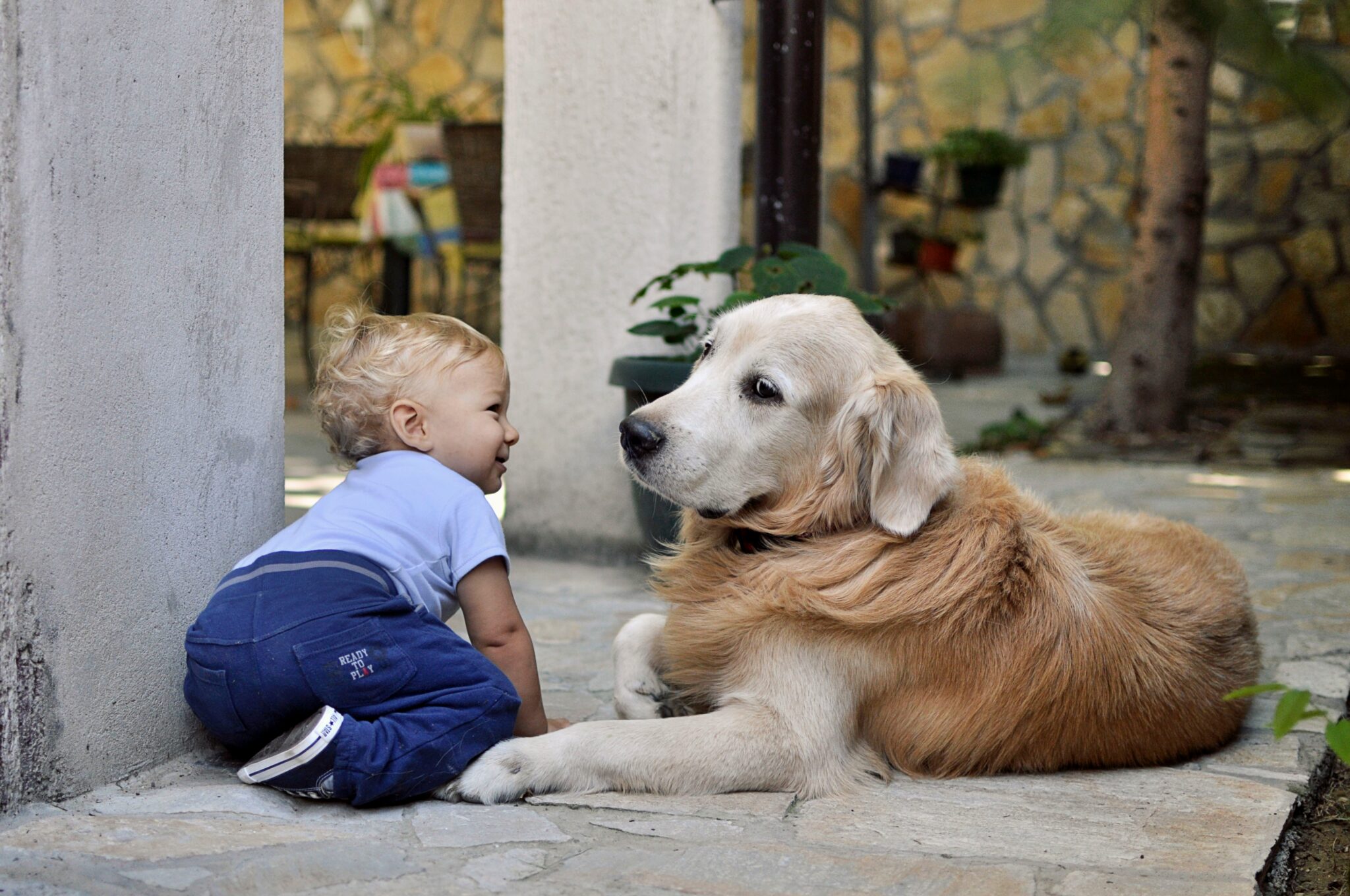
Children do not read warning signals reliably. Adults can usually recognise a stiff body, a hard stare, or a low growl as a sign to back away. Children, particularly young ones, often do not. They may move closer, reach toward the dog, or interpret a growl as playfulness.
Children cannot always respond appropriately even when they do notice. A child who has been told to leave the dog alone may still approach impulsively, particularly toddlers and young children who have not yet developed reliable impulse control.
This combination means that resource guarding situations between dogs and children can escalate to contact very quickly, often before an adult has time to intervene.
The warning signs: what to look for before a bite happens
Most dog bites to children do not come out of nowhere. They follow a sequence of escalating signals that were missed, ignored, or suppressed. Understanding the full ladder of resource guarding signals gives you the best chance of intervening early.
Early signals (easy to miss): – Eating faster when a child approaches – Moving the body slightly to block access to the resource – A brief, still pause in movement – Side-eyeing the child without moving the head – A subtle shift in muscle tension
Mid-level signals (more obvious): – A low growl – Lifting the lip to show teeth – A hard, direct stare at the approaching child – The body bracing or lowering over the resource
High-level signals (immediate danger): – A loud growl or snarl – Snapping in the air (a warning bite without contact) – Lunging toward the child – Contact biting
The growl is your dog communicating. It is the most important signal in the sequence and must never be punished. A dog that has been told off for growling will not stop feeling the need to guard. They will simply stop warning. A dog that does not warn before biting is significantly more dangerous than one that does.
If your dog has reached the snapping or biting stage, this is a professional emergency. Please do not manage this situation with workarounds and hope. Get in touch as soon as possible.
Immediate safety measures for families with resource guarding dogs
While you arrange professional behaviour support, the following management strategies are essential. These do not fix the underlying behaviour but they significantly reduce the risk of an incident occurring.
Feed the dog in a completely separate area from the children. A baby gate, a separate room, or a crate with the door closed during mealtimes means there is no opportunity for a child to approach a guarding dog while eating. This is non-negotiable until the behaviour has been properly addressed.
Remove high-value chews and items when children are present. Bones, raw hides, bully sticks, and food-stuffed toys are all common triggers. During the behaviour modification process, give these items only when children are out of the room or not in the house.
Teach children the rules clearly and repeat them often. Children old enough to understand should be told: never approach the dog while they are eating, never take a toy from the dog, never follow the dog when they move away with something. Younger children cannot be relied upon to follow rules consistently and must be supervised physically rather than verbally managed.
Do not punish the dog for growling. This removes the warning signal and makes the situation more dangerous, not less.
Do not remove items by force. This confirms the dog’s fear that your approach means loss and typically worsens guarding behaviour over time.
What parents often do that makes things worse
The most common parental responses to resource guarding around children are well-intentioned but counterproductive:
Telling the dog off. This increases the dog’s stress around the trigger and removes warning signals. It does not address the underlying emotional state.
Alpha rolling or physically dominating the dog. This is dangerous with a resource-guarding dog, causes significant emotional harm, and has no basis in current behaviour science.
Testing the dog repeatedly. Approaching the dog while they have a resource to see whether they growl is not a training exercise. It is rehearsing the guarding behaviour and increasing the risk of escalation.
Avoiding all triggers indefinitely. Management is essential in the short term but it is not a solution. A dog that has not had its resource guarding addressed will simply guard in a new context or with a lower threshold over time.
Getting professional help: what to expect
Resource guarding that involves growling, snapping, or biting around children should be addressed as a priority. The sooner it is assessed and worked on, the better the prognosis.
A behaviour consultation for resource guarding in a household with children begins with a thorough assessment of what the dog is guarding, the intensity of the behaviour, the age and behaviour of the children, and the layout of the household. From there a fully personalised programme is built covering:
- Counter-conditioning to change the dog’s emotional response to children approaching
- Management protocols specific to your household layout and routine
- Age-appropriate guidance for the children where possible
- Ongoing support between sessions
Before beginning behaviour work, all clients complete a vet health check and provide a veterinary referral, as pain and medical issues can contribute significantly to resource guarding. You can download the referral form here.
View behaviour consultation packages and book online
Frequently Asked Questions: Resource Guarding Dogs and Children
My dog has never bitten but growls at my child over food. Should I be worried?
Yes, and I say that not to alarm you but because early intervention is genuinely the most effective approach. A dog that growls is communicating discomfort. Without addressing the underlying emotional state, the threshold for growling typically gets lower over time and the behaviour can escalate. The earlier you seek help, the easier the behaviour is to work on.
My dog only guards from my toddler, not from adults. Why?
Toddlers move differently from adults — quickly, unpredictably, and at the dog’s level. They also do not respond to the dog’s warning signals in the way an adult would, which means the dog may feel their warnings are being ignored and escalate faster. This pattern is very common and does not mean the dog is aggressive — it means the risk in the current situation needs to be managed carefully and the behaviour worked on with professional support.
Should I rehome my dog if they are guarding around my child?
Rehoming is a last resort, not a first response. Most dogs with resource guarding around children make significant progress with the right behaviour modification programme and appropriate management in place. Before making any decision about rehoming, please speak to an accredited behaviourist who can give you an honest assessment of the severity of the behaviour and what a realistic programme would look like.
Can children be involved in the training?
Older children, typically from around eight years old depending on maturity, can sometimes be involved in very controlled, supervised elements of the counter-conditioning work. This can actually be beneficial as it helps the dog build a positive association with the child specifically. However, this is always assessed on a case-by-case basis and never done without professional guidance.
How long does it take to resolve resource guarding around children?
This varies considerably depending on the severity of the guarding, the history, the ages of the children, and how consistently the programme can be implemented. Some families see meaningful improvement within two to three sessions. Others are working on a longer programme. Your behaviourist will give you an honest assessment of what is realistic for your specific situation.
Is resource guarding around children a reason to put a dog to sleep?
In the vast majority of cases, no. Euthanasia for behaviour is considered only when a dog presents a risk that cannot be safely managed or modified, has caused serious injury, or where the welfare of the dog itself is severely compromised. Most resource guarding cases, including those involving children, are workable with professional support and appropriate management. Please speak to an accredited behaviourist before making any such decision.
How do I book a behaviour consultation in Kidderminster?
View our behaviour consultation packages and book securely online. If you would like to discuss the situation before booking, please get in touch and we will help you decide on the right approach.




Comments are closed