
What is a Sound Box?
A sound box is a simple, confidence-building, and enrichment activity for dogs. It uses a cardboard box filled with safe, lightweight objects and scattered treats to gently expose dogs to new sounds, movement, and mild novelty in a controlled, positive way.
How to Set It Up
• Equipment:
• A sturdy cardboard box
• Safe, lightweight objects (e.g. empty yoghurt pots, cardboard tubes, plastic containers)
• High-value food rewards (small, soft treats your dog loves)
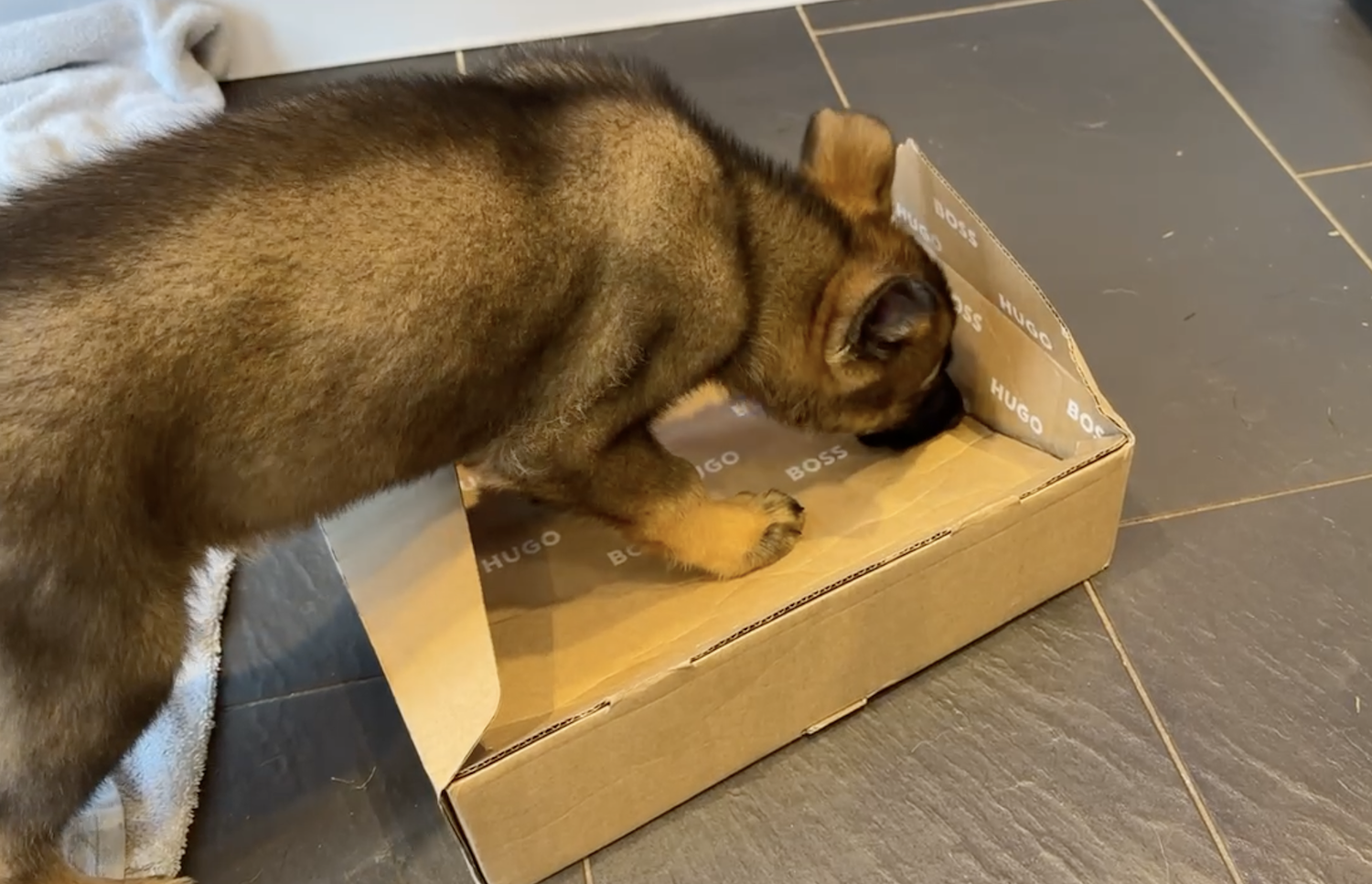
• Steps:
1. Place a variety of non-hazardous objects in the box.
2. Scatter high-value treats among and under the objects.
3. Put the box on the floor and allow your dog to approach and investigate at their own pace.
4. If your dog appears worried (freezing, retreating, avoiding, excessive lip licking), lower the sides of the box and remove some objects to reduce intensity.
5. As your dog becomes more comfortable, gradually add objects back in and, if appropriate, use a larger or deeper box.
Why It Helps: Behaviour and Confidence
The sound box supports confidence-building through several behaviour-based mechanisms:Gradual exposure: The dog experiences mild, manageable noise and movement from the objects. Over repeated sessions, this gentle, predictable exposure can reduce fear of novel sounds and environments.
• Positive reinforcement: High-value treats are hidden in the box, so investigating the rustling objects consistently leads to reward. This creates positive emotional associations with an initially “scary” context.
Voluntary interaction (agency) – a key principle: A central feature of this exercise is that the dog’s interaction is entirely voluntary. The dog controls how close they get, how long they stay, and when they retreat.
• The dog chooses if and when to approach the box.
• They are free to move away at any time without being pressured.
• You do not push, pull, or lure them into the box.
This sense of agency reduces stress and supports healthier coping strategies. When dogs learn that they can manage their own exposure to something mildly challenging and that doing so consistently leads to positive outcomes (food, successful searching), they become more willing to take small, calculated risks. Over time, this promotes genuine, durable confidence rather than simple compliance.
Shifting from avoidance to exploration – changing emotional responses: Nervous dogs often respond to novelty with avoidance (moving away, freezing, or shutting down). The sound box is designed to gently encourage a transition from avoidance to curious exploration:
• The environment is mildly challenging but safe and predictable.
• Each time the dog chooses to investigate, they are rewarded with treats and successful foraging.
• Repeated positive experiences in this context help the dog learn that new, slightly strange things can be safe and even enjoyable.
As the dog rehearses this pattern, “see something uncertain → investigate → positive outcome,” their default emotional response gradually shifts from worry to interest. You may see shorter hesitation times, more confident body language, and quicker recovery if something startles them.
Developing resilience – building coping skills through micro-challenges: The box presents a series of small, manageable challenges: rustling noises, moving objects, partial visual restriction, and the need to navigate around or through clutter to find food.
Each time the dog successfully copes with one of these micro-challenges and is rewarded, they are:
• Practising problem-solving (working out how to access the treats).
• Strengthening coping strategies for mild stress.
• Building frustration tolerance in a safe, supported context.
• Increasing behavioural flexibility, trying different approaches when one does not work.
These experiences contribute to overall resilience. In other words, they improve the capacity to recover from small stressors and adapt to change, which can generalise to other areas of the dog’s life (for example, new environments, novel sounds, or unfamiliar objects on walks).
Olfactory and mental enrichment: Sniffing and foraging are naturally calming behaviours. The combination of scent work and problem-solving helps many dogs relax and improves overall emotional wellbeing.
Do:
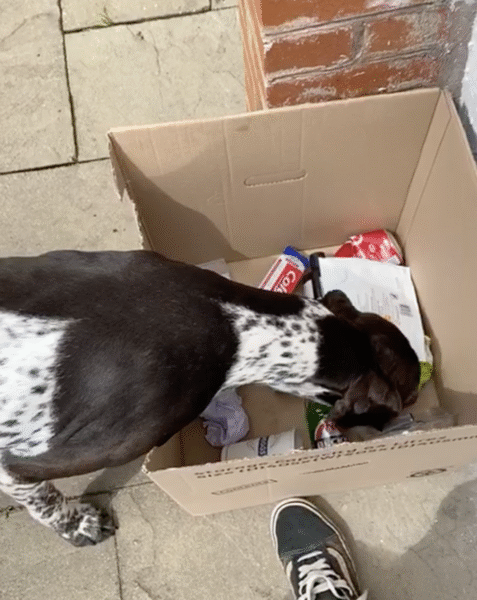
• Let your dog approach and investigate in their own time.
• Observe body language for signs of stress or relaxation.
• Adjust the difficulty (box height, number and type of objects) according to your dog’s comfort level.
• Keep sessions short and end on a positive note.
Do Not:
• Push or pull your dog towards the box.
• Shake the box at them or force interaction.
• Use heavy, sharp, or unstable objects.
Pressuring a nervous dog can increase fear and damage trust. Allowing them to choose how they interact supports true confidence-building and reinforces the importance of voluntary participation.
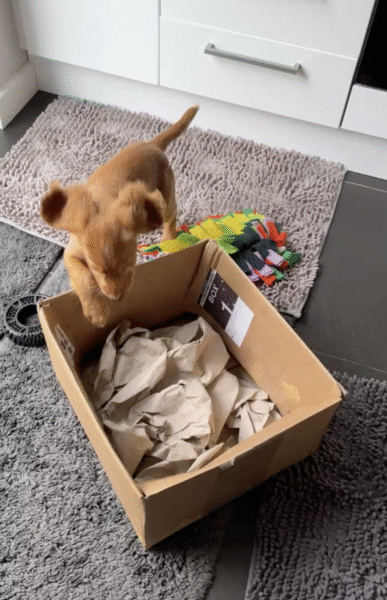
The sound box is a simple, science-informed exercise that:
• Combines controlled exposure with positive reinforcement
• Places voluntary interaction (agency) at the centre of the process
• Encourages a shift from avoidance to exploration
• Helps dogs develop resilience through repeated success in small challenges
• Provides valuable mental and sensory enrichment
Used thoughtfully and at the dog’s pace, it can be an effective tool for building confidence, especially in nervous or sensitive dogs.
Disclaimer: The information provided in this blog is for informational purposes only. Read our full Disclaimer.






Comments are closed